Defence Procurement Policies and Procedures in India
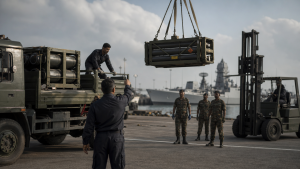
India’s defence procurement framework seeks to equip the armed forces while strengthening domestic design, manufacturing and sustainment. The Defence Acquisition Procedure (DAP) sets the rules for capital acquisitions, including procurement categories and indigenous-content requirements, with the broader aims of transparency, defence preparedness and self-reliance.
Defence Acquisition Framework
DAP 2020 is the current framework for capital defence acquisitions and replaced the Defence Procurement Procedure (DPP) 2016. It aligns procurement with the ‘Make in India’ initiative and treats acquisition as a wider process encompassing design, development, manufacturing, procurement and sustainment. It applies to the Army, Navy, Air Force and Indian Coast Guard. A draft DAP 2026 proposes further changes to strengthen self-reliance, accelerate acquisition timelines and expand the domestic defence industrial base. It also seeks to reduce the number of procurement categories from five to four and proposes provisions for Long Term Bulk Acquisition and Low-Cost Capital Acquisition.
Procurement Categories and Indigenous Content
DAP 2020 establishes a hierarchy of categories that gives priority to Indian design and production. Indigenous content is the proportion of a system’s components or value produced within India.
| Category | Key requirement under DAP 2020 |
| Buy (Indian – IDDM) | Highest-priority category; at least 50% indigenous content. IDDM means Indigenously Designed, Developed and Manufactured. |
| Buy (Indian) | At least 50% indigenous content where the design is indigenous; at least 60% where it is not. |
| Buy and Make (Indian) | Initial purchase followed by licensed or indigenous production; at least 50% indigenous content in the manufacturing phase. |
| Buy (Global – Manufacture in India) | Encourages foreign vendors to establish manufacturing or maintenance facilities in India; at least 50% indigenous content in the manufacturing phase. |
| Buy (Global) | Outright purchase from foreign sources; Indian vendors must meet 30% indigenous content under DAP 2020. |
The draft DAP 2026 proposes raising the IDDM threshold from 50% to at least 60% and extending a 30% indigenous-content requirement to foreign vendors supplying under Buy (Global). It also proposes incentives to encourage domestic participation.
Defence Acquisition Council and Process
The Defence Acquisition Council (DAC) is the Ministry of Defence’s apex decision-making body for capital acquisitions. Established in 2001 following recommendations of the Group of Ministers on reforming the national security system after the Kargil War, it is chaired by the Defence Minister. Its membership includes senior civil and military officials, including the service chiefs, Chief of Defence Staff and Defence Secretary.
- Acceptance of Necessity (AoN): The DAC grants AoN to capital acquisition proposals, marking the first formal stage of procurement.
- Category selection: It categorises proposals, such as Buy, Buy and Make, or Make, shaping the route and degree of domestic participation.
- Long-term planning: It approves the 15-year Long-Term Integrated Perspective Plan (LTPP) for modernisation.
- Project oversight: It monitors major projects and provides strategic oversight to align operational needs with national security objectives.
Emergency and Fast-Track Procurement
Emergency Procurement (EP) and fast-track routes are intended to secure mission-critical equipment for urgent operational requirements without the full time taken by standard procedures. They may be used during heightened security situations, conflict or other pressing needs. Equipment procured through EP is generally expected to be delivered within three to 12 months.
- Use of powers: Emergency procurement powers were first granted after the 2016 surgical strikes and were invoked after the 2019 Balakot airstrikes and during the 2020 Ladakh standoff.
- Approval limit: The Vice Chiefs of the Army, Navy and Air Force are authorised to approve procurements of up to ₹300 crore per project under this mechanism.
- Audit finding: A 2025 Comptroller and Auditor General (CAG) report noted that 72% of emergency procurement contracts experienced delays.
- Planned funding: A dedicated ₹40,000 crore emergency fund is planned to support rapid acquisition of critical systems.
Implementation Priorities
Procurement policy must balance speed, operational suitability and value for money with transparent decision-making. Delays in emergency contracts, as highlighted by the CAG, underline the need for timely delivery as well as rapid approval. Clear requirements and effective monitoring are important to ensure that urgent acquisition translates into improved defence preparedness.
- Transparency: Defined categories, indigenous-content rules and oversight help make procurement decisions more accountable.
- Defence preparedness: Fast-track routes address urgent capability gaps, while timely delivery remains essential to operational readiness.
- Industrial participation: Indigenous-content thresholds and manufacturing provisions can expand opportunities for Indian industry and reduce import dependence.
Key Prelims Takeaways
- Current framework: DAP 2020 governs capital defence acquisitions and replaced DPP 2016.
- Top-priority category: Buy (Indian – IDDM) requires at least 50% indigenous content under DAP 2020.
- Other thresholds: Buy (Indian) requires 50% with indigenous design and 60% without it; Buy and Make (Indian) requires 50% in the manufacturing phase.
- Draft DAP 2026: Proposes a 60% IDDM threshold and a 30% indigenous-content requirement for foreign vendors under Buy (Global).
- DAC: Chaired by the Defence Minister, it grants AoN and oversees capital acquisition planning and proposals.
- Emergency procurement: A 2025 CAG report found delays in 72% of emergency contracts; a ₹40,000 crore fund is planned.
Recent Context
Solar Defence and Aerospace Limited delivered 450 Nagastra-1R loitering munitions to the Indian Army on October 13 and 14, 2026—the largest single-batch supply of loitering munitions to the Army by a manufacturer. The ₹158 crore order was placed under an emergency procurement contract in June 2025. Nagastra-1R has over 80% indigenous content.
| Related | |
|---|---|