Parliamentary Committees on Finance and Tax Reforms
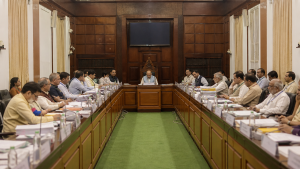
Parliamentary Oversight of Public Finance
Parliamentary control over public finance is a core feature of fiscal accountability in India. Financial committees examine how money is raised, spent, and audited, while also reviewing tax reforms and administrative efficiency. For Prelims, the key committees, their composition, and their mandate are important.
Department-Related Standing Committee on Finance
- Composition: The committee has 31 members: 21 nominated by the Speaker from the Lok Sabha and 10 nominated by the Chairman from the Rajya Sabha.
- Term: The term of office does not exceed one year from the date of reconstitution.
- Ministerial exclusion: A Minister cannot be nominated as a member. If a member is appointed a Minister, they cease to be a member from the date of appointment.
- Jurisdiction: It covers the Ministry of Finance, the Ministry of Corporate Affairs, the Ministry of Planning, and NITI Aayog.
- Functions: It examines Bills referred to it, considers annual reports, and scrutinizes national long-term policy documents laid before Parliament.
- Exam focus: The committee is important for legislative oversight, accountability in governance, and review of major fiscal and economic policy matters.
The Three Financial Standing Committees
- Public Accounts Committee (PAC): Established first in 1921 under the Government of India Act, 1919. It examines appropriation accounts and the reports of the Comptroller and Auditor General (CAG) of India.
- PAC purpose: It ensures that public funds are spent only as authorized by Parliament.
- Estimates Committee: It has 30 members, all elected from the Lok Sabha; the Rajya Sabha has no representation.
- Estimates Committee origin: It works on the basis of the 1950 recommendations of John Mathai.
- Estimates Committee role: It suggests alternative policies to improve efficiency and bring administrative economy in expenditure.
- Committee on Public Undertakings: Created in 1964 on the recommendation of the Krishna Menon Committee.
- Committee on Public Undertakings role: It reviews reports and accounts of specified public sector undertakings and ensures that public enterprises are run on sound business principles.
| Committee | Member Strength | Lok Sabha | Rajya Sabha | Key Function |
| Public Accounts Committee | 22 | 15 | 7 | Examines CAG audit reports and appropriation accounts |
| Estimates Committee | 30 | 30 | 0 | Evaluates economies and organisational efficiency in expenditure |
| Committee on Public Undertakings | 22 | 15 | 7 | Assesses reports and performance of public sector units |
Direct Tax Buoyancy and CBDT
- Meaning of tax buoyancy: Direct tax buoyancy is the ratio of the growth rate of direct tax collections to the growth rate of nominal Gross Domestic Product (GDP).
- Interpretation: A buoyancy value above 1 means direct tax revenue has grown faster than nominal GDP in the same period.
- Why it matters: It reflects the combined effect of economic growth, tax compliance, and revenue mobilisation.
- CBDT: The Central Board of Direct Taxes administers direct taxes in India under the Department of Revenue, Ministry of Finance.
- Taxes under CBDT: These include personal income tax, corporate tax, securities transaction tax, and other taxes levied directly on income or profits.
- Buoyancy vs elasticity: Buoyancy includes the effect of tax law changes and rate changes, while elasticity measures revenue growth excluding discretionary policy changes.
Income-tax Act, 2025 and New Tax Regime
- Replacement of old law: The Income-tax Act, 2025 came into force on 1 April 2026 and replaced the Income-tax Act, 1961.
- Objective: The new law is intended to simplify tax administration and reduce litigation.
- Effective threshold: The Union Budget 2025–26 set an effective tax-free income threshold of ₹12.75 lakh for salaried individuals under the default new tax regime.
- How the threshold works: It combines a ₹12 lakh nil-tax exemption limit with a ₹75,000 standard deduction.
- Optional framework: The new tax regime remains a separate optional system under the Income-tax Act, 2025.
- Policy feature: It offers lower tax slabs in exchange for foregoing several traditional deductions.
- Constitutional principle: Under Article 265, no tax can be levied or collected except by authority of law.
Key Prelims Takeaways
- Direct tax buoyancy: India recorded 1.27 in 2022–23, 1.48 in 2023–24, and 1.39 in 2024–25.
- Buoyancy meaning: A value above 1 indicates direct tax collections grew faster than nominal GDP.
- CBDT: It administers direct taxes under the Department of Revenue, Ministry of Finance.
- Standing Committee on Finance: It has 31 members, with 21 from the Lok Sabha and 10 from the Rajya Sabha.
- Ministerial restriction: Ministers cannot be members of the Standing Committee on Finance, PAC, or Estimates Committee.
- Income-tax Act, 2025: It replaced the Income-tax Act, 1961 from 1 April 2026.
- Tax-free threshold: The Union Budget 2025–26 set an effective ₹12.75 lakh threshold for salaried individuals under the new regime.
Recent Context
India’s direct tax buoyancy stayed above 1 for the third straight financial year, with the 2024–25 figure at 1.39. This has renewed attention on tax reforms, compliance, and revenue performance under the Income-tax Act, 2025.
In September 2026, the Parliamentary Standing Committee on Finance reviewed the Department of Revenue and the CBDT on direct tax reforms, taxpayer compliance, revenue collection, and buoyancy.
Current General Studies comprises current-affairs-based, General Studies-rich study material on policies, laws, institutions, economy, science, environment, governance, international relations, and other varied but important topics for UPSC and State PSC Prelims examinations.
Fortnightly PDF compilations: Available here
Originally written on
September 6, 2026
and last modified on
September 6, 2026.
| Related | |
|---|---|