History and Development of Football in India
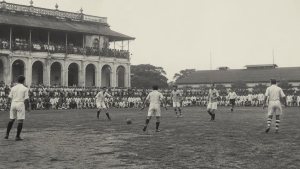
Football in India has grown from a colonial-era pastime into a structured national sport with historic clubs, major cup tournaments and an expanding league pyramid. Its story covers early institutional growth in Kolkata, India’s golden phase in Asian football, and the modern system governed by the AIFF and allied bodies.
Early Origin and Institutional Growth
British military personnel and sailors introduced football to India during the colonial period, with Kolkata emerging as the main centre of the game. The sport quickly spread through schools, clubs and local competitions, especially in Bengal.
- Nagendra Prasad Sarbadhikari: Often called the “Father of Indian Football,” he helped popularize the game among Indians by establishing the Boys’ Club in 1880 and forming local football clubs.
- Kolkata’s role: The city became the earliest and most important hub for organised football in India.
- Club culture: Early football development was driven by civilian clubs, educational institutions and military-linked teams.
Historic Milestones and National Pride
Indian football gained symbolic importance through landmark club and national team achievements. These successes shaped football’s place in the freedom movement and in India’s early sporting identity.
- 1911 IFA Shield: Mohun Bagan Athletic Club became the first bare-footed Indian team to defeat a British regiment, the East Yorkshire Regiment, by 2–1 to win the IFA Shield.
- National significance: The victory was widely seen as a major symbol of Indian pride during the freedom movement.
- Mohun Bagan: Founded in 1889, the club became one of the earliest major names in Indian football history.
- 1940s onward: Organised football in India began to acquire clearer national and international structures.
The Golden Era of Indian Football
India’s most successful competitive phase came under coach Syed Abdul Rahim between 1950 and 1962. During this period, the national team achieved some of its finest results in Asian and Olympic football.
- 1951 Asian Games: India won the gold medal in New Delhi by defeating Iran 1–0 in the final.
- 1956 Melbourne Olympics: India finished fourth and became the first Asian nation to reach the semi-finals of an Olympic football tournament.
- Neville D’Souza: He scored a hat-trick against Australia in the quarter-finals.
- 1962 Asian Games: India won its second Asian Games gold medal in Jakarta by defeating South Korea 2–1 in the final.
- 1950 FIFA World Cup: India qualified for the tournament in Brazil but did not participate in the final round.
Exam fact: India’s Olympic football performance in 1956 remains its best-ever finish at the Games.
Governing Bodies and International Integration
The modern organisation of football in India is centred on the All India Football Federation (AIFF), which coordinates national and domestic football under recognised international frameworks.
- AIFF establishment: Founded on June 23, 1937, at Army Headquarters in Shimla.
- FIFA affiliation: The AIFF became affiliated with FIFA in 1948.
- AFC founding member: India was among the founding members of the Asian Football Confederation in 1954.
- AIFF functions: It manages national teams, oversees domestic leagues, conducts refereeing and coaching licence courses, and runs grassroots development programmes.
- SAFF: India is a major member of the South Asian Football Federation and regularly participates in regional events such as the SAFF Championship for men and women.
Domestic League Structure
Indian club football now operates through a multi-tier league system recognised by the AIFF and AFC. The structure allows clubs to move through levels based on performance and eligibility.
| Level | Competition | Key Details |
| Tier 1 | Indian Super League (ISL) | Top division; operates with promotion and relegation system. |
| Tier 2 | I-League | Second-tier national professional league. |
| Tier 3 | I-League 2 | Feeder league for promotion to I-League. |
| Tier 4 | I-League 3 | Entry-level national division for state champions and qualifying clubs. |
| State leagues | Calcutta Football League, Goa Professional League, Bangalore Super Division, etc. | Regional competitions managed by state football associations. |
- ISL launch: Launched in 2013 and began its inaugural season in 2014.
- ISL status: It is India’s top-tier national league.
- ISL Shield: The winner of the regular season table earns direct qualification to AFC club competitions.
- I-League background: Established in 2007 to replace the National Football League, which was created in 1996.
- League transition: The I-League was earlier India’s top-flight competition before becoming the second tier under the AIFF roadmap.
Major Cup Tournaments and Traditional Competitions
India’s football calendar also includes several historic cup tournaments that remain important for both legacy and competition structure. Some are among the oldest in Asia and the world.
- Durand Cup: Founded in 1888 by Sir Mortimer Durand in Shimla; it is the oldest football tournament in Asia and the third oldest existing football competition in the world.
- Durand Cup format: Features teams from the ISL, I-League and invited units from the Indian Armed Forces.
- Inaugural winner: The Royal Scots Fusiliers won the first Durand Cup in Shimla in 1888.
- IFA Shield: Organised by the Indian Football Association (West Bengal) in 1893; it is one of the oldest cup competitions globally.
- Super Cup: The main knockout cup tournament featuring teams from the ISL and I-League; the winner qualifies for AFC continental club playoffs.
- Santosh Trophy: Started in 1941 and named after the late Maharaja Sir Manmatha Nath Roy Chowdhary of Santosh, now in Bangladesh.
- Santosh Trophy status: It is the premier state-level national football championship for state associations and institutions such as Railways and Services.
- Rovers Cup: Established in 1891 by British football enthusiasts in Mumbai and discontinued in 2001.
Key Prelims Takeaways
- Father of Indian Football: Nagendra Prasad Sarbadhikari.
- Historic club win: Mohun Bagan’s 2–1 victory over East Yorkshire Regiment in the 1911 IFA Shield.
- Golden era coach: Syed Abdul Rahim.
- India’s Olympic best: Fourth place at the 1956 Melbourne Olympics.
- AIFF established: 1937 at Shimla; FIFA affiliation in 1948.
- AFC founding member: India joined in 1954.
- Oldest tournament in Asia: Durand Cup, founded in 1888.
| Related | |
|---|---|