Sahel Region: Countries, Security Challenges, and Counterinsurgency Operations
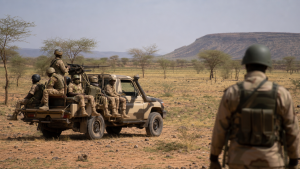
The Sahel is a semi-arid transition belt across Africa, lying between the Sahara Desert in the north and the tropical savannas in the south. It is important for geography, security studies, and regional geopolitics because instability here affects West and Central Africa as well as wider international counterterrorism efforts.
Geographic Extent and Core Countries
The Sahel stretches for more than 5,000 kilometers from the Atlantic Ocean to the Red Sea. In current security discussions, the core Sahelian countries most affected by conflict are Burkina Faso, Mali, Niger, Chad, and Mauritania.
- Burkina Faso: A landlocked central Sahelian state with Ouagadougou as its capital; it faces major insecurity in its northern and eastern provinces.
- Mali: Based in Bamako, Mali has been a focal point of Tuareg rebellions and extremist violence in the north.
- Niger: With Niamey as its capital, Niger lies at the heart of the Liptako-Gourma security corridor and borders Mali, Burkina Faso, Nigeria, and Chad.
- Chad: Centred at N’Djamena, Chad plays a security role around the Lake Chad Basin and contributes troops to regional efforts.
- Mauritania: With Nouakchott as its capital, Mauritania forms the western edge of the traditional Sahel group.
Main Security Threats
The security situation deteriorated sharply after the collapse of Libya in 2011, which increased the movement of weapons and armed fighters across porous borders. Since then, the region has faced a mix of insurgency, weak governance, and cross-border militancy.
- JNIM: Jama’at Nusrat al-Islam wal-Muslimin was formed in 2017 as an al-Qaeda affiliate through a coalition of Ansar Dine, the Macina Liberation Front, Al-Mourabitoun, and AQIM.
- ISSP: The Islamic State Sahel Province, formerly Islamic State in the Greater Sahara (ISGS), operates mainly in the tri-border Liptako-Gourma area.
- ISWAP and Boko Haram: These groups remain active around the Lake Chad Basin and carry out cross-border raids into Chad, Niger, and Nigeria.
- FLA: The Azawad Liberation Front is a coalition of Tuareg and Arab separatist groups seeking autonomy or self-determination in northern Mali.
Exam fact: The Liptako-Gourma region is the tri-border zone of Burkina Faso, Mali, and Niger.
Structural, Economic, and Environmental Drivers
Conflict in the Sahel is not only driven by armed groups. Long-term environmental stress, weak state presence, and illicit economies also deepen insecurity.
- Climate stress: Desertification, drying water sources, and irregular rainfall increase clashes between nomadic pastoralists and sedentary farmers.
- Porous borders: Vast desert spaces enable trafficking in arms, people, drugs, and other illicit goods.
- Illegal gold mining: Unregulated mining has become part of the informal conflict economy in several areas.
- Weak state infrastructure: Poor public services, limited governance in remote areas, and high poverty make rural communities vulnerable to non-state actors.
International and Regional Security Operations
Several military and peacekeeping missions have operated in the Sahel, often with overlapping mandates and changing political support.
- Operation Serval: Launched by France in 2013 to stop an insurgent advance on Bamako.
- Operation Barkhane: Began in 2014 as an expanded French-led counterterrorism operation and ended in 2022.
- MINUSMA: The UN Multidimensional Integrated Stabilization Mission in Mali operated from 2013 until its withdrawal in December 2023.
- Task Force Takuba: Created in 2020 to advise and assist Malian forces; it dissolved after regional political changes.
- MNJTF: The Multinational Joint Task Force continues to operate against Boko Haram and ISWAP around Lake Chad.
Regional Coalitions and Geopolitical Realignments
Security partnerships in the Sahel have shifted sharply in recent years, especially after military takeovers in parts of the region and the withdrawal of several Western-backed frameworks.
- G5 Sahel: Formed in 2014 by Burkina Faso, Chad, Mali, Mauritania, and Niger to coordinate security and development responses.
- Alliance of Sahel States (AES): Established in September 2023 by Burkina Faso, Mali, and Niger as a mutual defense pact.
- ECOWAS exit: The AES members formally withdrew from ECOWAS in January 2025.
- Russia’s Africa Corps: Russian military personnel and security contractors replaced Western forces in Mali, Burkina Faso, and Niger to provide training and defence assistance.
| Framework / Mission | Active Years | Key Members / Lead Partners | Core Purpose |
| Operation Barkhane | 2014–2022 | France, G5 Sahel countries | French-led counterterrorism operation targeting extremist networks |
| MINUSMA | 2013–2023 | United Nations, international contributors | Peacekeeping mission protecting civilians and supporting peace efforts |
| G5 Sahel | 2014–2023 | Burkina Faso, Chad, Mali, Mauritania, Niger | Regional framework for security and economic development |
| Alliance of Sahel States (AES) | 2023–Present | Burkina Faso, Mali, Niger | Mutual defence pact formed by military governments |
| Multinational Joint Task Force (MNJTF) | 2015–Present | Nigeria, Niger, Chad, Cameroon, Benin | Regional force combating Boko Haram and ISWAP around Lake Chad |
Key Prelims Takeaways
- Sahel definition: A semi-arid transition zone between the Sahara Desert and the tropical savannas.
- Length: The Sahel belt extends across Africa for more than 5,000 kilometers.
- Core crisis states: Burkina Faso, Mali, Niger, Chad, and Mauritania are the main countries highlighted in security discussions.
- Tri-border zone: Liptako-Gourma connects Burkina Faso, Mali, and Niger.
- Major militant groups: JNIM, ISSP, ISWAP, Boko Haram, and the FLA are key non-state actors in the region.
- France’s operations: Operation Serval began in 2013; Operation Barkhane followed in 2014 and ended in 2022.
- Lake Chad fact: Lake Chad has lost over 90 percent of its surface area since the 1960s, worsening resource competition.
Recent Context
The old article highlights recent geopolitical realignments in the Sahel, especially the formation of the AES and the withdrawal of Western missions. These changes have altered regional counterinsurgency cooperation and shifted security partnerships toward new bilateral and military arrangements.
| Related | |
|---|---|