India’s Biotechnology Regulatory Framework and Oversight Bodies
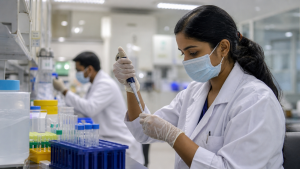
India’s biotechnology regulation is built to encourage research and innovation while keeping biosafety, environmental protection and clinical oversight in focus. The framework is spread across the Environment (Protection) Act, 1986, related rules, and a set of institutional bodies that supervise work at different stages.
For Prelims, it is important to know the legal basis, the hierarchy of oversight bodies, and the recent exemptions and policy changes that shape India’s biotech ecosystem.
Statutory Framework under the Environment (Protection) Act, 1986
The legal foundation for regulating biotechnology in India is the Environment (Protection) Act, 1986. Under this Act, the government framed rules to deal with genetically modified materials and recombinant DNA activities.
- Rules, 1989: The Rules for the Manufacture, Use, Import, Export and Storage of Hazardous Microorganisms, Genetically Engineered Organisms or Cells, 1989 govern activities involving Genetically Engineered Organisms (GEOs) and recombinant DNA.
- Coverage: These rules apply to gene therapy, clinical trials, industrial manufacturing, import, export, and large-scale environmental release of genetically modified organisms.
- Legislative attempt: The DNA Technology (Use and Application) Regulation Bill, 2019, which proposed a DNA Regulatory Board, was withdrawn from Lok Sabha on July 24, 2023.
The Six Regulatory and Advisory Oversight Bodies
Rules, 1989 created a decentralized system of six bodies to handle biosafety and genetic manipulation oversight. Their roles are distributed across the Department of Biotechnology (DBT), the Ministry of Environment, Forest and Climate Change (MoEFCC), and institutions at the state and district levels.
| Body | Ministry / Agency | Primary Role |
| RDAC (Recombinant DNA Advisory Committee) | Department of Biotechnology (DBT) | Advisory body recommending safety regulations for recombinant DNA research. |
| RCGM (Review Committee on Genetic Manipulation) | Department of Biotechnology (DBT) | Safety and monitoring body permitting experimental trials and laboratory research. |
| GEAC (Genetic Engineering Appraisal Committee) | Ministry of Environment, Forest and Climate Change | Apex statutory body approving commercial and environmental release of GEOs. |
| IBSC (Institutional Biosafety Committee) | Research and Development Institutions | Internal oversight body monitoring biosafety compliance at research centres. |
| SBCC (State Biotechnology Coordination Committee) | State Governments | State-level monitoring body with powers to inspect and enforce safety measures. |
| DLC (District Level Committee) | District Administrations | Local authority headed by the District Collector to verify safety compliance. |
Exam fact: GEAC is the apex authority for environmental release, while RCGM and IBSC handle laboratory and trial-level biosafety oversight.
Key Regulatory Developments and Exemptions
The regulatory structure has been updated to accommodate genome editing, streamline approvals and support newer biotech applications. The changes are significant for both research and commercial pathways.
- Genome-edited plants: Under the Guidelines for Safety Assessment of Genome Edited Plants, 2022, SDN-1 and SDN-2 categories were exempted from conventional GEAC clearance.
- Reason for exemption: These categories do not introduce foreign DNA and therefore remain outside full GEAC approval, while continuing under RCGM and IBSC oversight.
- Clinical trial licensing: The New Drugs and Clinical Trials (Amendment) Rules, 2026 reduced the evaluation timeline for new drug test licenses (Form CT-10) from 90 to 45 working days.
- Similar biologics: In May 2025, CDSCO and DBT released draft guidelines on Similar Biologics – Regulatory Requirements for Marketing Authorization in India, 2025.
- Genetic resources: The National Advisory Board on Management of Genetic Resources (NABMGR) was reconstituted by ICAR in 2026 under Dr. R.S. Paroda to coordinate genetic resource management.
BioE3 Policy and the Biomanufacturing Ecosystem
India is also trying to build a stronger bioeconomy through policy support, shared infrastructure and public-private collaboration. The aim is to expand high-performance biomanufacturing and create enabling facilities for startups and researchers.
- BioE3 Policy: The Union Cabinet approved the BioE3 (Biotechnology for Economy, Environment, and Employment) Policy on August 24, 2024.
- Long-term aim: It seeks to position India as a high-performance biomanufacturing hub by 2047.
- Six focus sectors: bio-based chemicals/APIs/enzymes, smart proteins/functional foods, precision biotherapeutics, climate-resilient agriculture, carbon capture and utilization, and marine and space research.
- Shared infrastructure: The policy proposes public-private facilities called मूलांकुर BioEnablers, including Biofoundries, Biomanufacturing Hubs, and Bio-AI Hubs.
- Space collaboration: DBT signed an MoU with ISRO for cooperation in Space Biotechnology and Space Biomanufacturing.
- Startup support: In September 2026, the Ministry of Science and Technology launched the BIO-NIVESH platform to connect deep-tech and biotech startups with investors.
- Bioeconomy size: India’s bioeconomy crossed USD 190 billion by mid-2026, up from USD 165.7 billion in 2024, with a target of USD 300 billion by 2030.
Key Prelims Takeaways
- Legal base: India’s biotech regulation rests on the Environment (Protection) Act, 1986, supported by the Rules, 1989.
- Core coverage: The Rules, 1989 apply to GEOs, recombinant DNA, gene therapy, clinical trials, industrial use, import-export and environmental release.
- Apex release authority: GEAC approves commercial and environmental release of genetically engineered organisms.
- Lab-level oversight: IBSC, RCGM and RDAC deal with institutional, trial-level and advisory functions.
- State and district role: SBCC and DLC provide local monitoring, inspection and compliance verification.
- Genome editing: SDN-1 and SDN-2 genome-edited plants are exempt from conventional GEAC clearance under the 2022 guidelines.
- Policy push: BioE3 promotes biomanufacturing through six priority sectors and shared enabling infrastructure.
| Related | |
|---|---|