Nuclear Non‑Proliferation Treaty, Safeguards, Additional Protocol and Obligations
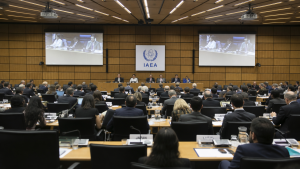
The Treaty on the Non-Proliferation of Nuclear Weapons (NPT) is the cornerstone global pact on nuclear restraint. It seeks to stop the spread of nuclear weapons, promote peaceful nuclear cooperation, and advance disarmament.
The treaty is implemented through an IAEA verification system, mainly via safeguards and related legal instruments such as the Additional Protocol.
Structure and Pillars of the NPT
- Opened and in force: The NPT opened for signature in 1968, entered into force in 1970, and was extended indefinitely in May 1995.
- Three pillars: The treaty is built on non-proliferation, disarmament, and the right to peaceful uses of nuclear energy.
- Nuclear-weapon states: The treaty recognizes five nuclear-weapon states — the United States, Russia, China, France, and the United Kingdom.
- Parties to the treaty: There are 186 non-nuclear-weapon states parties, taking the total number of NPT parties to 191.
- Non-signatories: India, Pakistan, Israel, and South Sudan have never signed the NPT.
- Withdrawal case: North Korea acceded in 1985 and announced its withdrawal in 2003.
IAEA Safeguards under the NPT
- Article III: Non-nuclear-weapon states must conclude Comprehensive Safeguards Agreements with the IAEA.
- Purpose of safeguards: These safeguards verify that nuclear materials are not diverted from peaceful use to weapons development.
- Coverage status: As of late 2025, 183 non-nuclear-weapon states parties had brought Comprehensive Safeguards Agreements into force.
- Pending cases: Three states parties had yet to bring such agreements into force.
- Non-NPT states: India, Pakistan, and Israel remain outside the NPT, and the IAEA applies item-specific safeguards in these countries.
Additional Protocol
- Nature of the instrument: The Additional Protocol is a voluntary legal instrument that expands IAEA access to information and sites.
- Verification value: It helps the IAEA detect undeclared nuclear activities more effectively.
- Scope: It strengthens safeguards by granting broader rights of physical access and information.
- Status as of 31 December 2025: Additional Protocols were in force for 144 states and Euratom.
- Recent accessions: Saint Vincent and the Grenadines brought its Additional Protocol into force in 2025, while Guinea and Somalia did so in 2026.
Compliance and State Actions
- Guinea and Somalia: In 2026, both states brought into force their Comprehensive Safeguards Agreements and Additional Protocols.
- Iran: Iran ceased the provisional application of its Additional Protocol in February 2021.
- Iran-related communication: On November 20, 2025, Iran informed the IAEA Director General that its Cairo agreement was terminated.
- IAEA General Conference: The 70th Regular Session of the IAEA General Conference is scheduled for September 14 to 18, 2026.
- Leadership: The IAEA is headed by Director General Rafael Mariano Grossi.
U.S.-Saudi Arabia Civil Nuclear Cooperation Agreement
- Section 123 agreement: On July 22, 2026, the United States and Saudi Arabia signed a 30-year Civil Nuclear Cooperation Agreement under Section 123 of the U.S. Atomic Energy Act.
- Additional Protocol: The agreement does not require Saudi Arabia to sign the IAEA Additional Protocol for civil nuclear activities.
- Enrichment and reprocessing: It does not require Saudi Arabia to permanently renounce domestic uranium enrichment or spent fuel reprocessing.
- Congressional review: The U.S. administration transmitted the signed agreement to Congress on August 24, 2026, triggering a statutory 90-day review period.
Key Prelims Takeaways
- NPT core aim: The treaty seeks non-proliferation, peaceful nuclear cooperation, and disarmament.
- Recognized nuclear-weapon states: Only five states are officially recognized under the NPT — the US, Russia, China, France, and the UK.
- Safeguards obligation: Comprehensive Safeguards Agreements are mandatory for non-nuclear-weapon states parties under Article III.
- Safeguards coverage: 183 of the 186 non-nuclear-weapon NPT parties had active Comprehensive Safeguards Agreements by late 2025.
- Additional Protocol: It is voluntary, but it gives the IAEA expanded access to detect undeclared nuclear work.
- Current status: Additional Protocols were in force for 144 states and Euratom as of 31 December 2025.
- Non-NPT states: India, Pakistan, and Israel remain outside the NPT, and the IAEA uses item-specific safeguards in their cases.
Current General Studies comprises current-affairs-based, General Studies-rich study material on policies, laws, institutions, economy, science, environment, governance, international relations, and other varied but important topics for UPSC and State PSC Prelims examinations.
Fortnightly PDF compilations: Available here
Originally written on
April 9, 2026
and last modified on
September 5, 2026.
| Related | |
|---|---|