Bonded Labour and Human Trafficking Laws in India
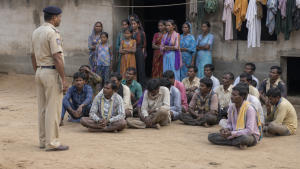
India has a strong legal framework to prevent human trafficking, bonded labour and forced employment. It combines constitutional safeguards, special laws and penal provisions to protect vulnerable groups and punish offenders.
The focus is not only on prohibition, but also on rescue, release and rehabilitation of victims. For Prelims, the key point is that both constitutional rights and criminal statutes work together against exploitation.
Constitutional Safeguards
The Constitution directly protects human dignity and prohibits exploitative labour practices.
- Article 23: Prohibits traffic in human beings, begar and other similar forms of forced labour.
- Article 23(2): Allows the State to impose compulsory service for public purposes, provided there is no discrimination on grounds of religion, race, caste or class.
- Article 24: Bans the employment of children below 14 years in any factory, mine or other hazardous employment.
- Article 21: Has been interpreted by the Supreme Court to include the right to live with human dignity, free from bonded or forced labour.
- Article 39: Directs the State to protect the health and strength of workers and prevent the abuse of children.
- Article 42: Requires just and humane conditions of work.
- Article 43: Seeks a living wage and a decent standard of life for workers.
- Article 46: Requires special care for the educational and economic interests of Scheduled Castes, Scheduled Tribes and weaker sections.
Bonded Labour System (Abolition) Act, 1976
The Bonded Labour System (Abolition) Act, 1976 completely abolishes bonded labour across India. It frees every bonded labourer from obligations arising from bonded debt, customary practices or ancestral agreements.
- Extinguishment of debt: All existing bonded debts are rendered null and void.
- Bar on recovery: Creditors cannot file civil or criminal suits for recovery of bonded debt.
- Property restoration: Any property mortgaged by a bonded labourer must be restored immediately after release.
- Protection against eviction: Freed bonded labourers cannot be evicted from residential premises occupied before release.
- Enforcement: District Magistrates are empowered to implement the Act, assisted by District and Sub-Divisional Vigilance Committees.
- Penalty: The Act provides imprisonment up to 3 years and a fine up to ₹2,000.
Laws Against Human Trafficking and Sexual Exploitation
India also uses specific criminal laws to curb trafficking, commercial sexual exploitation and related offences.
- Immoral Traffic (Prevention) Act, 1956: Originally enacted as the Suppression of Immoral Traffic in Women and Girls Act (SITRA), it was amended in 1986 and renamed the Immoral Traffic (Prevention) Act (ITPA).
- Core focus: Criminalises commercial sexual exploitation and trafficking for prostitution.
- Covered offences: Operating brothels, living on the earnings of prostitution and detaining persons in premises where prostitution occurs.
- Enforcement: Special Police Officers and Trafficking Police Officers are key enforcement authorities.
- Penalty: Punishment ranges from 7 years’ imprisonment to life sentence, depending on the offence.
Child and Adolescent Labour Law
The Child and Adolescent Labour (Prohibition and Regulation) Act, 1986 was comprehensively amended in 2016. It is central to the legal fight against child exploitation in labour markets.
- Children below 14 years: Employment is banned in all occupations and processes.
- Adolescents: The Act introduces the category of adolescents, defined as persons aged 14 to 18 years.
- Hazardous work: Employment of adolescents is banned in hazardous occupations, including mines, inflammable substances and hazardous processes.
- Educational link: The law is aligned with the Right to Education Act, 2009.
Penal Provisions Under IPC and BNS
General criminal law also punishes trafficking, compulsory labour and exploitation of trafficked persons. The relevant provisions have corresponding sections in the Indian Penal Code and the Bharatiya Nyaya Sanhita.
- Section 370 IPC / Section 143 BNS: Penalises human trafficking for exploitation, including physical exploitation, sexual exploitation, slavery or forced removal of organs.
- Section 370A IPC / Section 144 BNS: Punishes persons who knowingly employ or engage a trafficked person.
- Section 374 IPC / Section 146 BNS: Criminalises unlawful compulsory labour imposed against a person’s will.
Quick Comparison of Key Laws
| Act | Year | Primary focus | Key enforcement / penalty |
| Bonded Labour System (Abolition) Act | 1976 | Debt bondage and forced customary labour | District Magistrates and Vigilance Committees; imprisonment up to 3 years and fine up to ₹2,000 |
| Immoral Traffic (Prevention) Act | 1956 / 1986 | Commercial sexual exploitation and sex trafficking | Special Police Officers / Trafficking Police Officers; punishment from 7 years to life sentence |
| Child and Adolescent Labour Act | 1986 / 2016 | Child labour and hazardous work by adolescents | Bans employment of children below 14 years and hazardous work for adolescents aged 14 to 18 years |
Key Prelims Takeaways
- Article 23 is the constitutional basis against trafficking, begar and forced labour.
- Article 24 prohibits employment of children below 14 years in factories, mines and hazardous work.
- Bonded Labour System (Abolition) Act, 1976 abolishes bonded labour and nullifies bonded debt.
- District Magistrates and Vigilance Committees are central to implementing the bonded labour law.
- ITPA targets commercial sexual exploitation and trafficking for prostitution.
- Child and Adolescent Labour Act, 2016 amendment bans child labour and hazardous work by adolescents.
- Sections 370, 370A and 374 IPC correspond to trafficking, use of trafficked persons and compulsory labour.
| Related | |
|---|---|