15-Million-Year-Old Shark Fossils Found in Odisha
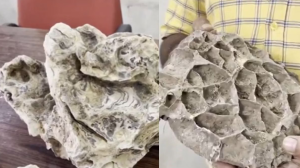
Fossils dating back nearly 15 million years were discovered near Baripada in Odisha’s Mayurbhanj district on 18 June 2026. The find includes shark teeth, shark vertebrae, fish bones, mollusc shells, and microscopic marine organisms from the Baripada Fossil Bed along the Budhabalanga river.
Miocene Epoch and Marine Deposits
The fossils belong to the Miocene Epoch, which lasted from about 23 million years ago to 5.3 million years ago. The presence of marine fossils in inland Mayurbhanj district indicates that parts of present-day Odisha were once covered by a shallow sea.
Baripada Fossil Bed and Fossil Types
The Baripada Fossil Bed contains vertebrate and invertebrate remains. Shark teeth and vertebrae are among the most common marine vertebrate fossils found at such sites, while mollusc shells and microfossils are used in palaeoenvironmental studies. Preliminary studies show that shark remains form nearly half of the fish fossils recovered from the site. The current Bay of Bengal coastline is about 60 kilometres from Baripada, and the fossil assemblage records a much older marine setting in the region.
Field Discovery and Research Institutions
The fossils were found during a student field trip led by Dr Debabrata Nandi, Assistant Professor at the PG Department of Remote Sensing and GIS, North Orissa University, and Maharaja Sriram Chandra Bhanja Deo University. The discovery has involved collaboration with palaeontologists and other institutions for further study of the site. Local residents in Mayurbhanj district have long called the fossil remains “Asura Hadda”, a local term meaning “demon bones”. The term is part of the regional folk memory associated with unusual bone-like remains.
Important Facts for Exams
- The Miocene Epoch is a division of the Neogene Period in the Cenozoic Era.
- Shark teeth are among the most durable vertebrate fossils because enamel preserves well over long periods.
- Fossil beds are sedimentary layers that preserve remains, impressions, or traces of ancient life.
- Geo-heritage sites are geological locations protected for scientific study, education, and conservation.
Geo-heritage and Conservation
The Baripada fossil zone has been discussed as a possible geo-heritage site or fossil park. Such sites are used in India for scientific protection, public education, and geo-tourism.
| Related | |
|---|---|