Swachh Survekshan Awards 2025-26
Swachh Survekshan is the Ministry of Housing and Urban Affairs’ annual assessment of urban cleanliness. The 2025-26 edition marked its tenth year and operated under the Swachh Bharat Mission-Urban (SBM-U), using city assessments, citizen feedback and new location-based award categories.
Swachh Survekshan 2025-26
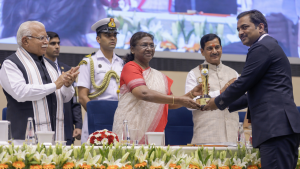
The awards ceremony was held on November 11, 2026, at Vigyan Bhawan in New Delhi. President Droupadi Murmu conferred the awards. Union Minister for Housing and Urban Affairs and Power Manohar Lal, and Minister of State for Housing and Urban Affairs Tokhan Sahu, were also present. The tenth edition assessed more than 4,751 cities. Its theme was “Swachhata Ki Nayi Pehel—Badhayein Haath, Karein Safai Saath”. The assessment formed part of the wider SBM-U effort to improve sanitation and cleanliness in urban areas.
Assessment Framework and Enhancements
Urban Local Bodies (ULBs) were evaluated using 43 indicators across 10 assessment areas. These covered waste segregation, collection, transportation and processing, as well as visible cleanliness, access to sanitation and citizen feedback. The framework therefore assessed both the handling of waste and the cleanliness and sanitation experienced in public spaces. The 2025-26 assessment added or strengthened several areas of focus:
- Citizen feedback: Greater emphasis was placed on residents’ participation in the assessment.
- Waterfronts and water bodies: Coverage was expanded to urban riverfronts, coastlines and water bodies.
- Open defecation and urination: Focused indicators addressed prevention of these practices.
- Tourist and heritage locations: Specific indicators covered cleanliness at tourist and heritage hotspots.
- Schools: The framework included behaviour-change initiatives in schools.
New award categories recognised Himalayan cities, riverfront towns and coastal towns. Their inclusion allowed the survey to recognise cleanliness efforts in different urban settings, alongside its wider assessment of cities.
Key Awardees
Awards recognised cities and city pairs in distinct categories; the listed results should not be read as a single overall ranking.
- Swachh Shehar League: Navi Mumbai was recognised as the cleanest city in this category.
- Riverfront towns: Rewa secured first position among the cleanest riverfront towns.
- Himalayan cities: Rudrapur emerged as the cleanest Himalayan city. Jammu and Shopian were also among the top three Clean Himalayan Cities.
- Union Territory category: Budgam received the State First Swachh City Award.
- Swachh Shehar Jodi: The top three city pairs were Ahmedabad-Sanand, Indore-Depalpur and Tirupati-Kuppam.
Citizen Participation and Urban Outcomes
Citizen participation was a central component of the assessment. Around 2.70 crore citizens submitted feedback during the 2025-26 survey. This feedback contributed to the evaluation alongside the indicators applied to ULBs. The reported ranking outcomes also included gains among smaller cities. More than 1,700 smaller cities improved their rankings, while over 350 cities improved by more than 500 positions. These figures show the scale of ranking movement across participating urban areas, rather than only recognition of the highest-ranked cities.
Related Missions and Initiatives
Swachh Survekshan is conducted under the aegis of SBM-U 2.0. The mission was launched on October 1, 2021, for five years and is being implemented until October 2026. Its vision is to achieve “Garbage Free” status for all cities by 2026.
- Swachh Shehar Jodi: Launched by Manohar Lal on September 27, 2025, this urban waste-management initiative promotes mentorship and peer learning between high-performing cities and other urban bodies.
- City pairings: The initiative pairs 70 mentor cities with 191 mentee cities across 33 States and Union Territories.
- Swachh Survekshan Grameen 2025: The Department of Drinking Water and Sanitation undertakes this separate rural assessment, ranking States and districts against SBM-Grameen Phase II parameters.
- Rural mission period: SBM-Grameen Phase II runs from 2020-21 to 2025-26. The rural survey assesses service-level progress, direct observation of village sanitation, functionality of solid- and liquid-waste-management plants, and citizen feedback.
Key Prelims Takeaways
- Nodal ministry: Ministry of Housing and Urban Affairs for the urban survey.
- Edition and coverage: Tenth edition; more than 4,751 cities assessed.
- Assessment: 43 indicators across 10 areas, including waste management, sanitation, cleanliness and citizen feedback.
- Theme: “Swachhata Ki Nayi Pehel—Badhayein Haath, Karein Safai Saath”.
- New categories: Himalayan cities, riverfront towns and coastal towns.
- Related programmes: SBM-U 2.0 is urban; Swachh Survekshan Grameen is undertaken by the Department of Drinking Water and Sanitation under SBM-Grameen Phase II.
| Related | |
|---|---|