KUFOS Team Discovers New Thorny Seahorse Species
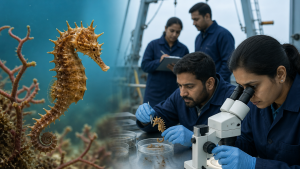
Researchers from the Kerala University of Fisheries and Ocean Studies (KUFOS) identified a new seahorse species in August 2026. The species has been named Hippocampus amandavincentae after marine biologist Amanda Vincent. The finding separates the thorny seahorse complex from Hippocampus histrix, which had been treated as one species for about 150 years.
Taxonomy of Seahorses
Seahorses belong to the genus Hippocampus and the family Syngnathidae. Taxonomy is the branch of biology that deals with the naming, description, and classification of organisms. Species identification in marine taxonomy often uses external morphology, museum specimens, and genetic evidence.
Discovery and Collection Site
The new species was first collected from fish bycatch at Tuticorin fisheries harbour in Tamil Nadu. Shalu Kannan, a PhD graduate from KUFOS and the lead author of the study, identified the specimen during the research work. The findings were published in the taxonomy journal Zootaxa in August 2026.
Species Complex and Valid Names
The study concluded that the thorny seahorse previously called Hippocampus histrix actually represents three distinct species. It also confirmed Hippocampus jayakari from the northwestern Indian Ocean as a separate valid species. Historical museum specimens and online records from the Indian Ocean had often been assigned to Hippocampus histrix.
Important Facts for Exams
- Hippocampus is the genus name for seahorses and belongs to the family Syngnathidae.
- Zootaxa is a peer-reviewed journal that publishes zoological taxonomy research.
- Fish bycatch refers to non-target marine organisms caught during fishing operations.
- The Kerala coast now has five known seahorse species after this identification.
Indian Marine Biodiversity
India’s marine biodiversity includes species recorded from the Arabian Sea, the Bay of Bengal, and the Indian Ocean. Taxonomic revisions in marine fauna often change the number of recognised species in a region.
| Related | |
|---|---|