Supreme Court Recognises Trauma Care Under Article 21
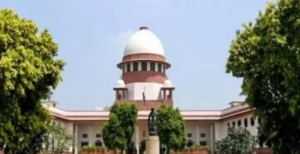
The Supreme Court of India declared access to trauma care an integral part of the Right to Life under Article 21 of the Constitution of India on 26 May 2026. The ruling came in SaveLIFE Foundation & Anr. vs Union of India & Ors and directed time-bound reforms in emergency medical response, ambulance services, and trauma data systems.
Article 21 and Right to Life
Article 21 of the Constitution of India states that no person shall be deprived of life or personal liberty except according to procedure established by law. The Supreme Court has interpreted Article 21 in several cases to include rights connected with health, dignity, and emergency medical treatment.
Emergency Response and Helpline Integration
The Court directed integration of emergency helplines 100, 101, 102, 108, 1033, and 1091 into the single national emergency number 112 within three months. Number 112 functions as India’s integrated emergency response number under the Emergency Response Support System framework.
Trauma Registries, Ambulances, and Good Samaritan Measures
The Union Ministry of Health and Family Welfare must issue guidelines for a national trauma registry within eight weeks. States and Union Territories must then establish State Trauma Registries covering public and private medical facilities. All registered ambulances must comply with the National Ambulance Code, install GPS or vehicle tracking systems, and integrate with helpline 112. States and Union Territories must also create physical and digital grievance redressal systems for Good Samaritans within three months.
Important Facts for Exams
- Article 21 of the Constitution of India protects the Right to Life and Personal Liberty.
- 112 is India’s single emergency number for integrated response services.
- The Motor Vehicles Act, 1988 provides the legal framework for road transport and traffic regulation in India.
- Good Samaritan rules in India are linked to protection for persons who assist road accident victims.
Road Accident Victim Treatment Scheme
States and Union Territories that have not adopted the Cashless Treatment of Road Accident Victims Scheme, 2025, also called PM RAHAT, must operationalise it within three months. The Court treated non-compliance with this direction as a violation of the Motor Vehicles Act, 1988.
Continuing Judicial Oversight
The Supreme Court retained continuing oversight in the matter and required chief secretaries of all States and Union Territories to submit action-taken reports within fixed timelines. The case is expected to return before the Court after four months.
| Related | |
|---|---|