Supreme Court Collegium Approves 10 High Court Judges
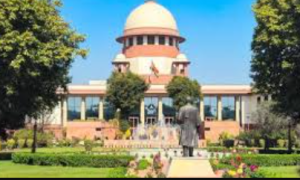
The Supreme Court Collegium has approved the elevation of 10 advocates as judges of the Punjab and Haryana High Court. The Collegium system in India is used for appointments and transfers of judges in the Supreme Court and High Courts under the constitutional framework developed through judicial decisions. The Collegium moved two separate resolutions, recommending the names of 10 lawyers, including Advocates Monica Chhibber Sharma, Harmeet Singh Deol, Puja Chopra, Sunish Bindlish, Navdeep Singh, Divya Sharma, Ravinder Malik, Pravindra Singh Chauhan, Rajesh Gaur, and Minderjeet Yadav, for appointment as judges at the Punjab and Haryana High Court. In a separate resolution, the Supreme Court Collegium recommended the elevation of three judicial officers as judges of the Andhra Pradesh High Court. These included Sunitha Gandham, Alapati Giridhar and Purushottam Kumar Chintalapudi.
Supreme Court Collegium
The Supreme Court Collegium is a body of the Chief Justice of India and the four senior-most judges of the Supreme Court. It recommends names for appointment as judges of the Supreme Court and High Courts. The system is not mentioned in the Constitution of India and operates through judicial interpretation of Articles 124 and 217.
High Court Judge Appointment
A High Court judge is appointed by the President of India under Article 217 of the Constitution. The appointment process involves consultation with the Chief Justice of India, the Governor of the State, and the Chief Justice of the concerned High Court. A person must be a citizen of India and must have held a judicial office in India for 10 years or must have been an advocate of a High Court for 10 years.
Punjab and Haryana High Court
The Punjab and Haryana High Court is a common High Court for the States of Punjab and Haryana and the Union Territory of Chandigarh. It functions from Chandigarh and is one of the constitutional courts under Part VI of the Constitution. High Courts in India exercise original, appellate, and writ jurisdiction under Articles 226 and 227.
Important Facts for Exams
- The Supreme Court Collegium is linked to the Second Judges Case of 1993 and the Third Judges Case of 1998.
- Article 124 deals with the appointment of Supreme Court judges, while Article 217 deals with the appointment of High Court judges.
- High Courts in India were established under the Indian High Courts Act, 1861, during British rule.
- The Punjab and Haryana High Court serves both a State and a Union Territory from a single seat at Chandigarh.
The President appoints High Court judges after the collegium process and formal consultation under the Constitution. The Punjab and Haryana High Court is one of the 25 High Courts in India.
| Related | |
|---|---|