Rusty-spotted Cat Recorded in Uttar Pradesh’s National Chambal Sanctuary
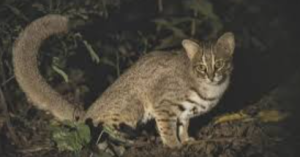
The Rusty-spotted Cat, scientifically named Prionailurus rubiginosus, was documented for the first time in the National Chambal Sanctuary in Uttar Pradesh in May 2026. This record is the first confirmed presence of the species in southern Uttar Pradesh and adds a new locality to its known range in the state.
Rusty-spotted Cat: Taxonomy and Identification
The Rusty-spotted Cat belongs to the family Felidae and is one of the smallest wild cats in Asia. The species is identified by its rusty-brown spots, short coat, and small body size, and its morphological features are compared with published species descriptions for field confirmation.
National Chambal Sanctuary: Location and Ecology
The National Chambal Sanctuary is a protected area in Uttar Pradesh, Madhya Pradesh, and Rajasthan along the Chambal River. It is known for riverine habitats, gharials, mugger crocodiles, Gangetic river dolphins, and several bird species associated with alluvial plains and ravines.
Field Documentation and Research Method
Researchers from the Wildlife Institute of India documented the cats during fieldwork in the region. The individuals were photographed, measured, and assigned GPS locations, and the evidence was recorded opportunistically during the survey.
Important Facts for Exams
- The Rusty-spotted Cat is listed as Prionailurus rubiginosus in zoological classification.
- The Wildlife Institute of India is based in Chandrabani, Dehradun, Uttarakhand.
- The National Chambal Sanctuary is a tri-state protected area in northern India.
- Road collision is a known cause of mortality for small mammals in fragmented habitats.
Conservation Context
The documentation of the species in southern Uttar Pradesh extends the known distribution of the Rusty-spotted Cat in the region. Roadkill mitigation and targeted surveys are standard conservation tools used for small carnivores in protected and semi-protected landscapes.
| Related | |
|---|---|