Russia Tests Sarmat Nuclear Missile
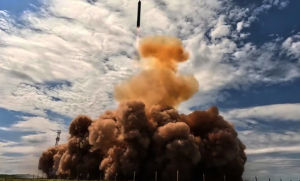
Russia conducted a test launch of the Sarmat super-heavy intercontinental ballistic missile on 12 May 2026 from the Plesetsk Cosmodrome in the Arkhangelsk region. The missile was stated to have hit its designated target at the Kura test range on the Kamchatka Peninsula, and the launch was linked to Russia’s programme to modernise its nuclear forces.
Sarmat Missile System
The Sarmat is a liquid-fuelled intercontinental ballistic missile developed for Russia’s strategic missile forces. It is known to NATO as SS-29 Satan II and is intended to replace the Soviet-era R-36M2 Voyevoda, which NATO designated as SS-18 Satan. The missile is designed to carry multiple nuclear warheads and to penetrate missile defence systems.
Launch Sites and Deployment Plan
Plesetsk Cosmodrome is a Russian military space launch facility in Arkhangelsk region and has been used for missile and space launches. The Kura test range is located on the Kamchatka Peninsula and serves as a target area for long-range missile tests. Russia plans to deploy the first Sarmat missile regiment to combat duty in the Uzhur formation of Krasnoyarsk Krai by the end of 2026.
Test History and Technical Features
The Sarmat programme has faced delays and reported test failures. A reported failed test in September 2024 left a 60-metre crater at the Plesetsk launch silo, and another suspected failure was reported in November 2025 after the missile crashed shortly after take-off. The missile has been described as having a range exceeding 35,000 kilometres.
Important Facts for Exams
- The Sarmat is an intercontinental ballistic missile, or ICBM, used for long-range strategic nuclear delivery.
- NATO designates the Sarmat as SS-29 Satan II.
- The R-36M2 Voyevoda was the Soviet-era missile system that Sarmat is meant to replace.
- The Kura test range is in Kamchatka, which lies in Russia’s Far East.
Strategic Forces of Russia
Russia’s nuclear forces form part of its strategic deterrent and include land-based missiles, submarine-launched missiles, and strategic bombers. The Uzhur formation in Krasnoyarsk Krai is associated with Russia’s Strategic Missile Forces.
| Related | |
|---|---|