Norway Uses 3,500 AI Laser Units to Treat Salmon Lice
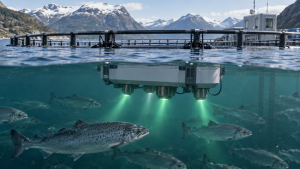
As of November 2026, Oslo-based Stingray Marine Solutions has deployed more than 3,500 AI-guided laser units in Norwegian salmon farms to control sea lice. The commercial aquaculture systems are not military equipment; about 1,000 units were added in the past year.
How optical delousing works
Cameras and artificial intelligence identify sea lice on farmed salmon. Blue light improves contrast, allowing precision lasers to target individual parasites. The units operate continuously. Stingray’s latest annual report says they protect more than 112 million fish and monitor 20–25% of Norway’s farmed salmon population.
Reported benefits and health concerns
The company reports improved salmon growth and welfare, lower mortality and reduced reliance on chemical baths, which can stress fish and contribute to lice resistance. Norway’s 2024 Fish Health Report linked laser systems to severe unilateral cataracts in harvest-size salmon. It also noted that effectiveness can vary under high lice pressure or certain water conditions.
Important Facts for Exams
- Taxonomy: Sea lice are copepod crustaceans in the Caligidae family, within the order Siphonostomatoida.
- Life-cycle stages: Sea lice alternate between free-swimming planktonic and parasitic stages, with each developmental stage separated by a moult.
- Beam focusing: Laser light is coherent, allowing it to be focused to a tight spot—a property useful for precision targeting.
| Related | |
|---|---|