New Snake Species Discovered in Meghalaya’s Garo Hills
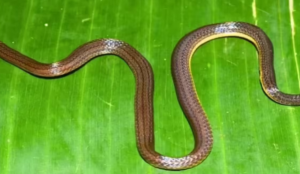
A new species of snake, named Calamaria garoensis, has been discovered in the Garo Hills region of Meghalaya, adding to the rich biodiversity of northeastern India. The finding has drawn significant attention after Meghalaya Chief Minister Conrad K. Sangma publicly praised the scientists involved in the discovery. The identification of this species highlights the ecological importance of the region and the need for continued biodiversity research.
What is Calamaria garoensis?
Calamaria garoensis belongs to the genus Calamaria, a group of small, secretive snakes often called reed snakes. These snakes usually live underground or within leaf litter, making them difficult to detect. Their hidden lifestyle means that many species remain undocumented. The newly identified snake was found during field surveys in the dense forests of the Garo Hills and was confirmed through detailed taxonomic research.
Who discovered the new species?
The discovery was made through a joint effort involving scientists from Help Earth, Cotton University, Assam Don Bosco University, Mizoram University, the Zoological Survey of India and Indonesia’s National Research and Innovation Agency. The collaboration combined field observations, specimen analysis and scientific classification. Such international cooperation is important in taxonomy, especially in biodiversity-rich regions where species documentation remains incomplete.
Why Garo Hills is important for biodiversity
The Garo Hills form part of the Meghalaya biodiversity hotspot and contain dense tropical and subtropical forests that support a wide range of plant and animal life. Northeastern India is already known for its rich herpetological diversity, including reptiles and amphibians. Limited exploration in some forest areas means many species are still being discovered. The finding of Calamaria garoensis further strengthens the region’s status as a key ecological zone.
Important Facts for Exams
- Calamaria garoensis is a newly discovered snake species from Garo Hills, Meghalaya.
- Calamaria snakes are commonly known as reed snakes and are usually small and secretive.
- The Zoological Survey of India plays a major role in species identification and biodiversity studies.
- Meghalaya is part of the Indo-Burma biodiversity hotspot, known for rich flora and fauna.
Government response and conservation value
Chief Minister Conrad K. Sangma congratulated the research team and described the discovery as a reflection of Meghalaya’s natural heritage. He also highlighted the importance of preserving forests and supporting scientific studies on wildlife. Such discoveries not only improve scientific understanding but also strengthen conservation efforts by drawing attention to fragile ecosystems that require protection from habitat loss and environmental degradation.
| Related | |
|---|---|