MoD Signs ₹770-Crore BEL Radar Contract
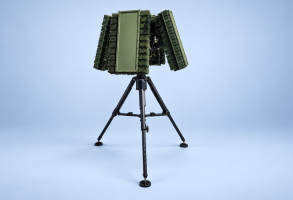
On 21 October 2026, the Ministry of Defence (MoD) signed a contract worth approximately ₹770 crore with Bharat Electronics Limited (BEL) to procure Improved Low Level Light Weight Radars (LLLR-I). The contract was signed in New Delhi in the presence of Defence Secretary Rajesh Kumar Singh and officials from the MoD and BEL. The Indian Army will use the system for air-defence surveillance against aircraft and unmanned aerial threats.
Radar functions and target detection
The LLLR-I detects and tracks fighter-sized aircraft, mini drones and micro drones. Its system can automatically prioritise incoming aerial targets, including Unmanned Aerial Systems (UAS). It can provide target indications to weapon systems through wired or wireless communication. Remote control of radar modes and display of the air situation picture are also system functions.
Radar technology and design
The LLLR-I is a pulse-Doppler, software-defined radar with an Active Electronically Scanned Array (AESA) antenna and Gallium Nitride (GaN) amplifiers. Its 3D processing supports the detection of low radar-cross-section targets, including drones and unmanned aerial vehicles. Four fixed phased-array antenna panels provide 360-degree coverage. The panels are passively cooled, and the radar has no mechanical motion or moving parts.
Development and deployment
The LLLR-I is an upgraded version of the Defence Research and Development Organisation-designed Aslesha radar. It is man-portable and intended for deployment in plains, deserts and high-altitude areas. The system’s fixed antenna panels are mounted on a tripod. The procurement is linked to the government’s Viksit Bharat @2047 vision and domestic defence manufacturing, including participation by Micro, Small and Medium Enterprises (MSMEs).
Important Facts for Exams
- Pulse-Doppler radar uses the Doppler effect to distinguish moving targets from stationary surroundings.
- An AESA radar uses an electronically controlled array of antenna elements to steer its beam.
- Gallium Nitride is a semiconductor material used in high-frequency and high-power electronic devices.
- UAS is an abbreviation for Unmanned Aerial Systems.
The LLLR-I combines a software-defined radar platform with AESA technology and GaN amplifiers. Its stated coverage is 360 degrees, provided by four fixed phased-array antenna panels.
| Related | |
|---|---|