Major Internal Security Laws in India
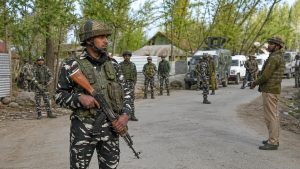
India’s internal security framework combines special laws, preventive detention and anti-terror provisions to deal with threats such as insurgency, terrorism, organised crime and disturbances to public order. These laws give the State extraordinary powers in exceptional situations, but they also raise recurring questions on civil liberties, accountability and the balance between security and rights.
Armed Forces (Special Powers) Act, 1958
AFSPA is a Union law that enables the deployment of armed forces in areas declared “disturbed”. It is meant for exceptional situations where ordinary policing is considered inadequate. In notified areas, armed forces personnel receive special legal protection while carrying out counterinsurgency and law-and-order duties.
- Disturbed area: A region notified by the Central Government or the Governor for a limited period, based on the security situation.
- Use of force: Personnel may use force, even causing death, against persons acting in contravention of law if they consider it necessary to maintain public order.
- Arrest powers: They may arrest बिना warrant any person who has committed, or is reasonably suspected of having committed or being about to commit, a cognizable offence.
- Search powers: They can enter and search premises without a warrant to arrest persons, recover arms, or seize unlawfully held property.
- Protection from prosecution: No prosecution, suit or other legal proceeding can be initiated for actions under the Act except with the sanction of the Central Government.
- Usage: AFSPA was initially associated with countering the Naga insurgency and has been applied in parts of the North-East and Jammu and Kashmir.
Unlawful Activities (Prevention) Act, 1967
UAPA is India’s principal anti-terror law. It was enacted to prevent unlawful activities that threaten the sovereignty and territorial integrity of the country. Over time, amendments have expanded it into a comprehensive framework for dealing with terrorism-related offences.
- Unlawful activity: Any action by an individual or association intended to disrupt the territorial integrity and sovereignty of India.
- Unlawful association: The government may declare an association unlawful if its activities fall within the Act’s scope.
- Terror financing: Financing of terrorism is specifically criminalised.
- 2004 amendment: Expanded the law to include terrorist acts.
- 2019 amendment: Empowered the Central Government to designate individuals as terrorists.
- Property seizure: The Director General of the NIA can approve seizure or attachment of property where the investigation is conducted by the agency.
- Detention period: An accused can be held up to 180 days without a charge sheet, subject to extension as permitted by law.
UAPA applies to Indian citizens inside and outside India, persons in government service wherever posted, and persons on ships and aircraft registered in India.
National Security Act, 1980
NSA is a preventive detention law. It allows the Central Government or a State Government to detain a person to prevent conduct harmful to the defence of India, relations with foreign powers, security of India, public order, or the maintenance of essential supplies and services.
- Preventive detention: Detention can be ordered without a criminal charge, based on the authority’s assessment of likely future conduct.
- Detention period: A person may be detained for up to 12 months.
- Advisory board: The detention must be reviewed by an advisory board within three months.
- Safeguards: The detained person has the right to know the grounds of detention, except where disclosure is against public interest.
- Representation: The detainee may make a representation against the detention order.
National Investigation Agency Act, 2008
The NIA Act established the National Investigation Agency to investigate and prosecute offences affecting the sovereignty, security and integrity of India, friendly relations with foreign states, and matters connected with international treaties, agreements, conventions and UN resolutions.
- Origin: The agency was created in the aftermath of the 2008 Mumbai terror attacks.
- Nationwide jurisdiction: The NIA can investigate scheduled offences across India.
- State consent not required: It can take over specified cases without separate permission from state governments.
- Special Courts: The Act provides for Special Courts for trial of scheduled offences.
Other Legal and Constitutional Provisions
- General criminal laws: The Indian Penal Code and the Code of Criminal Procedure remain central to internal security enforcement.
- State laws: States have enacted laws to combat organised crime, such as the Maharashtra Control of Organised Crime Act, 1999.
- Article 355: Imposes a duty on the Union to protect states against external aggression and internal disturbance.
- Article 356: Provides for President’s Rule in certain constitutional breakdown situations.
- Seventh Schedule: “Police” and “Public Order” are State subjects.
- Concurrent List: Preventive detention for reasons connected with the security of India falls within the Concurrent List.
- Security balance: These provisions reflect the continuing tension between counterinsurgency policy, civil liberties and the need for security reform.
Key Prelims Takeaways
- AFSPA, 1958: A Union law that allows deployment of armed forces in disturbed areas.
- Disturbed area notification: Can be issued by the Central Government or the Governor for a limited period.
- AFSPA powers: Include use of force, arrest without warrant and search without warrant in notified areas.
- UAPA, 1967: India’s principal anti-terror law dealing with unlawful activities and terrorism.
- UAPA 2019 amendment: Enabled designation of individuals as terrorists.
- NSA, 1980: A preventive detention law for national security, public order and essential supplies.
- NIA Act, 2008: Created the NIA after the 2008 Mumbai terror attacks and gave it nationwide jurisdiction.
Recent Context
The Centre extended AFSPA for another six months from October 1, 2026, in specified areas of Manipur, Nagaland and Arunachal Pradesh. The Ministry of Home Affairs issued Gazette notifications on September 25, 2026, after reviewing the law and order situation. Gazette notifications are official government publications used to notify legal and administrative orders.
| Related | |
|---|---|