Major Disturbed Area Provisions in India
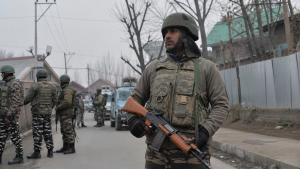
The Armed Forces (Special Powers) Act, 1958 (AFSPA) is a Union law that enables the deployment of armed forces in notified “disturbed areas”. It is intended for situations of serious law and order disturbance, insurgency, or internal security concern. Because the Act confers exceptional powers, its use is meant to remain limited, area-specific, and subject to periodic review.
Armed Forces (Special Powers) Act, 1958
AFSPA was enacted in 1958 to provide a legal framework for the armed forces to operate in areas where ordinary law and order machinery is considered inadequate. The law is associated mainly with internal security operations in selected regions, rather than across a whole state by default.
The Act does not automatically apply everywhere. It becomes operational only when a region is officially declared “disturbed” through the prescribed process. This makes AFSPA a special statute meant for exceptional circumstances, not routine administration.
What is a Disturbed Area?
A “disturbed area” is a notified region where the Central Government or the Governor of a state can bring AFSPA into force for a limited period. The declaration is generally made where the security situation is assessed to be serious enough to require extraordinary powers under the statute.
Such notifications are issued through Gazette notifications, which are official government publications used for legal and administrative orders. The declaration is not permanent and is expected to be reviewed periodically in light of the prevailing law and order situation.
- Declared authority: Central Government or Governor, as applicable.
- Form of notification: Gazette notification.
- Scope: Usually limited to specific areas, not the entire state indefinitely.
- Duration: For a limited period, subject to review and extension.
Powers Under AFSPA
Once an area is declared disturbed, armed forces personnel operating there receive special powers for maintaining public order and security. These powers are broader than those available under ordinary policing laws, but they are to be exercised under specified legal conditions.
- Search without warrant: Personnel may search premises without a warrant in notified circumstances.
- Arrest without warrant: Individuals may be arrested without a warrant where necessary under the Act.
- Use of force: Force may be used, including to the extent of causing death, against persons acting in contravention of law or order in a disturbed area, subject to legal conditions.
- Protection from prosecution: Armed forces personnel have protection for actions taken under the Act, and prosecution requires prior sanction of the Central Government.
AFSPA’s most important legal safeguard is that prosecution for actions taken under the Act needs prior Central Government sanction.
Constitutional and Administrative Concerns
AFSPA is often discussed in the context of balancing security needs with constitutional safeguards. On one side is the state’s duty to restore order in disturbed regions; on the other is the need to prevent misuse of exceptional powers. This balance is central to the debate around the Act.
The law provides armed forces with operational protection, but it also raises questions about accountability, civil liberties, and the role of ordinary criminal law. For prelims, the key point is that AFSPA is not a general policing law: it is a special law for exceptional situations and limited territories.
- Security objective: To address insurgency and serious internal disturbance.
- Exceptional nature: Applies only in declared disturbed areas.
- Accountability issue: Prior sanction is required for prosecution.
- Limited application: Designed for specific regions and periods, not indefinite state-wide use.
Historical Application and Review
AFSPA was first enacted to deal with insurgency in the Northeastern states, and over time it has been applied in selected parts of different states and Union Territories facing internal security challenges. Its application has usually remained confined to specific districts, police station areas, or other defined zones.
The withdrawal or extension of AFSPA is decided after review of the security situation by the concerned authorities. Factors such as the intensity of insurgency, frequency of violence, and overall stability are taken into account. When conditions improve, the Act has been withdrawn from certain areas in a phased manner.
- Review basis: Law and order assessment.
- Key factors: Insurgency level, violence, stability, and security conditions.
- Pattern of use: Area-specific and revisable.
- Withdrawal: Possible where the situation improves.
Current Status in the Northeast
The Centre extended AFSPA for another six months from October 1, 2026, in specified areas of Manipur, Nagaland, and Arunachal Pradesh. The Ministry of Home Affairs issued Gazette notifications on September 25, 2026, after reviewing the law and order situation in these states.
In Manipur, the declaration covers the entire state except areas under 13 police stations across five districts. In Nagaland, it applies to nine districts and areas under 21 police stations in five additional districts. In Arunachal Pradesh, the extension covers Tirap, Changlang, and Longding districts, along with areas under Namsai, Mahadevpur, and Chowkham police stations in Namsai district.
Key Prelims Takeaways
- AFSPA full form: Armed Forces (Special Powers) Act, 1958.
- Nature of law: A Union law enacted in 1958.
- Main purpose: To permit deployment of armed forces in disturbed areas.
- Disturbed area declaration: Made by the Central Government or the Governor for a limited period.
- Notification mode: Through Gazette notifications.
- Special powers: Search, arrest, and use of force under specified conditions.
- Prosecution safeguard: Prior Central Government sanction is needed.
- Current extension: Extended for six months from October 1, 2026, in specified areas of Manipur, Nagaland, and Arunachal Pradesh.
- Manipur coverage: Entire state except areas under 13 police stations in five districts.
- Nagaland coverage: Nine districts plus areas under 21 police stations in five more districts.
- Arunachal Pradesh coverage: Tirap, Changlang, Longding, and parts of Namsai district.
| Related | |
|---|---|