Important Public Interest Litigation Concepts in India
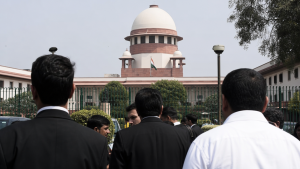
Public Interest Litigation (PIL) is a judicial tool that allows any public-spirited person or organization to seek relief for violations affecting the public, especially marginalized groups. It has become an important means of enforcing rights, ensuring accountability, and addressing issues of public concern.
Introduction to Public Interest Litigation (PIL)
Public Interest Litigation (PIL) is a legal mechanism that allows any individual or organization to file a lawsuit in a court of law for the protection of public interest. Unlike traditional litigation, the petitioner does not need to be a personally aggrieved party. The primary objective of a PIL is to secure justice for marginalized, disadvantaged, or unrepresented groups of society. This litigation model focuses on matters of public concern, such as environmental pollution, consumer protection, human rights violations, and administrative lapses.
Origin and Evolution of PIL in India
The concept of PIL originated in the United States during the 1960s to provide legal representation to underrepresented groups. In India, the judiciary introduced this concept in the late 1970s and early 1980s.
- Justice V.R. Krishna Iyer: The initial steps toward PIL began with Justice V.R. Krishna Iyer in the Mumbai Kamgar Sabha v. Abdulbhai case in 1976.
- Justice P.N. Bhagwati: Justice P.N. Bhagwati formalized the concept in the landmark case of S.P. Gupta v. Union of India in 1981. This case earned him the reputation of being the pioneer of PIL in India.
- Public-spirited citizen: The court declared that any public-spirited citizen could approach the courts to seek redressal for public injury or violation of constitutional rights.
Constitutional and Legal Provisions
PIL is not defined in any statute, act, or the Constitution of India. It is a product of judicial activism. However, it draws its constitutional backing from specific provisions.
Article 32 of the Constitution
This article grants citizens the right to petition the Supreme Court of India directly for the enforcement of Fundamental Rights. It forms the constitutional basis for filing PILs at the highest judicial level.
Article 226 of the Constitution
This provision empowers the High Courts in India to issue writs for the enforcement of Fundamental Rights and for any other purpose. Citizens can file PILs in their respective state High Courts under this article.
Article 39A of the Constitution
This Directive Principle of State Policy mandates the State to secure equal justice and provide free legal aid to citizens. It supports the core philosophy of PIL by ensuring that poverty does not bar anyone from seeking justice.
Core Concepts and Principles of PIL
The legal framework of PIL relies on several unique judicial concepts that distinguish it from standard civil or criminal litigation.
Relaxation of Locus Standi
In traditional law, only the person whose rights are violated has the standing (locus standi) to file a case. PIL relaxes this rule. Any person acting in good faith can file a petition on behalf of individuals or groups who cannot access courts due to poverty, ignorance, or social barriers.
Epistolary Jurisdiction
This principle allows the judiciary to treat informal communications, such as letters, postcards, or even newspaper reports, as formal writ petitions. The court waives strict procedural requirements to prioritize substantive justice.
Non-Adversarial Litigation
Standard litigation involves two opposing parties competing to win a case. PIL is collaborative. The petitioner, the court, and the government agencies work together to resolve public issues and enforce fundamental rights.
Inquisitorial Procedure
In PIL cases, courts often adopt an inquisitorial role. The judges can appoint independent commissions, expert committees, or amicus curiae (friends of the court) to gather facts, conduct investigations, and submit reports.
Landmark PIL Cases in India
| Case Name & Year | Key Issue Addressed | Legal Principle or Outcome |
| Hussainara Khatoon v. State of Bihar (1979) | Plight of undertrial prisoners | Recognized the right to a speedy trial as an integral part of Article 21; led to the release of thousands of undertrial prisoners. |
| Sunil Batra v. Delhi Administration (1980) | Jail reforms and prisoner torture | Allowed a letter written by a co-prisoner to be treated as a petition; restricted the use of solitary confinement and bar fetters. |
| S.P. Gupta v. Union of India (1981) | Independence of judiciary and locus standi | Solidified the relaxation of locus standi; established that any citizen can file a PIL for public injury. |
| Bandhua Mukti Morcha v. Union of India (1984) | Existence of bonded labor | Directed the state governments to identify, release, and rehabilitate bonded laborers across the country. |
| M.C. Mehta v. Union of India (1986) | Oleum gas leak and industrial hazards | Introduced the doctrine of Absolute Liability for enterprises engaged in hazardous activities. |
| Vishaka v. State of Rajasthan (1997) | Sexual harassment of women at work | Formulated the Vishaka Guidelines to protect working women in the absence of a dedicated legislative act. |
| Lily Thomas v. Union of India (2013) | Electoral reforms and political corruption | Ruled that convicted MPs and MLAs stand immediately disqualified from holding office upon conviction. |
Supreme Court Guidelines on PIL Filings
To prevent the misuse of PIL, the Supreme Court has issued strict guidelines outlining which subjects can be filed as PILs and which cannot.
Acceptable Matters for PIL
- Bonded labor and child labor: Petitions regarding bonded labor and child labor.
- Minimum wages: Matters concerning the non-payment of minimum wages to workers.
- Jail inmates: Petitions sent by jail inmates complaining of harassment or seeking speedy trial.
- Police misconduct: Complaints against police misconduct, such as refusal to register cases or custodial violence.
- Environment and heritage: Petitions concerning environmental pollution, ecological imbalance, and maintenance of heritage monuments.
- Women and weaker sections: Matters relating to the harassment of women, child marriage, and atrocities against weaker sections.
Non-Acceptable Matters for PIL
- Landlord-tenant disputes: Landlord-tenant disputes and eviction matters.
- Service matters: Service matters, pension disputes, and employment issues.
- Admission disputes: Petitions challenging admission to medical, engineering, or other educational institutions.
- Early hearing requests: Petitions filed for early hearing of pending cases in lower courts.
Criticisms and Challenges of PIL
While PIL has democratized access to justice, it also faces several criticisms and administrative challenges.
- Abuse of process: Individuals often file frivolous petitions for personal publicity, political gains, or business rivalry. This phenomenon is frequently termed “Publicity Interest Litigation” or “Private Interest Litigation.”
- Judicial overreach: Critics argue that courts sometimes cross the boundary of the separation of powers. By directing executive actions or formulating policies, the judiciary enters areas reserved for the executive and the legislature.
- Increased judicial burden: The influx of PILs increases the workload of the higher judiciary, adding to the existing backlog of standard cases.
- Problems of implementation: Courts may issue directions, but the executive branch often struggles to implement them due to administrative constraints or a lack of budgetary resources.
Rare Facts for Prelims
- Article 214: It provides that there shall be a High Court for each state in India.
- Epistolary jurisdiction: This is one of the most distinctive features of Indian PIL, allowing even letters and postcards to be treated as petitions.
- Amicus curiae: In PIL matters, courts may appoint an amicus curiae to assist with facts and legal issues.
- Absolute liability: The doctrine evolved in M.C. Mehta v. Union of India is stricter than the English rule of strict liability for hazardous industries.
- Vishaka Guidelines: These were issued by the Supreme Court in the absence of a specific law on workplace sexual harassment.
- Public accountability: PIL is often used to compel the State to act where administrative inaction affects collective rights and public welfare.
| Related | |
|---|---|