MAHE Opens BSL-3 Facility for Infectious-Disease Research
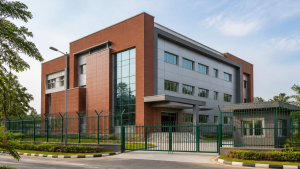
Manipal Academy of Higher Education (MAHE) inaugurated and began operating a Biosafety Level 3 (BSL-3) facility on October 26, 2026, at Manipal, a suburb of Udupi in coastal Karnataka. The facility is designed for high-containment biomedical research, infectious-disease studies, diagnostics, surveillance and translational biomedical science. It received certification from the Review Committee on Genetic Manipulation (RCGM), under the Department of Biotechnology (DBT), in March 2026.
Biosafety levels and containment
Biosafety levels classify laboratory containment practices and facilities according to the risk posed by biological agents and the work being conducted. The four levels, BSL-1 to BSL-4, involve progressively higher containment requirements, with BSL-4 being the highest level. BSL-3 facilities handle infectious agents that can cause serious disease and may present a risk through inhalation; laboratory access and work practices are therefore controlled.
The MAHE facility has controlled access, engineering controls and stringent biosafety practices. Its specified infrastructure includes directional airflow maintained under negative pressure and High-Efficiency Particulate Air (HEPA) filtration. These measures form part of the facility’s containment design.
Regulatory certification and oversight
The RCGM is a committee under the DBT that reviews and monitors research activities involving genetically engineered organisms and hazardous microorganisms. MAHE’s facility received RCGM certification in March 2026. Dr Sharath K. Rao, MAHE Vice Chancellor, announced that the facility was open and operational on October 26, 2026.
A facility governance committee includes representatives from MAHE constituent units and members of the Institutional Biosafety Committee (IBSC). The committee is responsible for biosafety oversight and coordination. Dr Chiranjay Mukhopadhyay, Director of the Manipal Institute of Virology (MIV), was recognised for work on the facility’s establishment and operationalisation.
BSL-3 laboratory features
BSL-3 laboratories use specialised infrastructure and procedures to contain infectious agents during research. Common containment elements include restricted access, controlled airflow and filtration systems. Research, diagnostic testing and surveillance conducted in such facilities must follow applicable biosafety and regulatory requirements.
Important Facts for Exams
- Biosafety levels range from BSL-1 to BSL-4, with BSL-4 representing the highest containment level.
- RCGM operates under the Department of Biotechnology, Government of India.
- HEPA stands for High-Efficiency Particulate Air.
- MAHE’s BSL-3 facility is located in Manipal, in coastal Karnataka.
MAHE’s BSL-3 facility received RCGM certification in March 2026 and commenced operations in October 2026. Its stated research areas include infectious diseases, diagnostics, surveillance and translational biomedical science.
| Related | |
|---|---|