Women’s Reservation Act 2023 Comes Into Force
The Union government has formally brought into force the Constitution (One Hundred and Sixth Amendment) Act, 2023, widely known as the Nari Shakti Vandan Adhiniyam. The law ministry notified April 16, 2026, as the commencement date, marking a key procedural step towards implementing women’s reservation in legislatures.
What the Act Provides
The Act mandates 33 per cent reservation for women in the Lok Sabha and state legislative assemblies. It introduces new constitutional provisions, including Articles 330A and 332A, to ensure representation of women, including those from Scheduled Castes and Scheduled Tribes. The reservation is designed to rotate across constituencies after each delimitation exercise.
Why Notification Was Necessary
The notification of the Act’s commencement is described as a technical but essential step. It allows the government to introduce further amendments to refine implementation. Without formally bringing the Act into force, subsequent legislative changes to its provisions would not have been procedurally feasible.
Link With Delimitation and Census
The original framework of the Act made its implementation contingent on the first delimitation exercise following a post-enactment census. However, with the next census expected in 2027, this timeline risked delaying women’s political participation. To address this, the government has introduced the Constitution (One Hundred and Thirty-First Amendment) Bill, 2026, proposing that delimitation be carried out using data from the 2011 Census.
What to Note for UPSC Prelims?
- The 106th Constitutional Amendment Act, 2023 provides 33% reservation for women in Lok Sabha and state assemblies.
- Articles 330A and 332A relate to women’s reservation in Parliament and state legislatures.
- Delimitation refers to redrawing of electoral constituency boundaries.
- Census data is a key basis for delimitation exercises in India.
Legislative Developments and Way Ahead
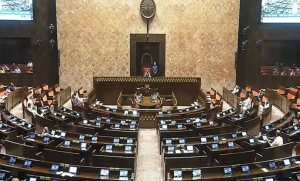
The Lok Sabha is currently debating multiple Bills, including the proposed 131st Constitutional Amendment, aimed at expediting the rollout of women’s reservation by the 2029 general elections. If passed, these changes could accelerate implementation and significantly enhance women’s representation in India’s political system.
| Related | |
|---|---|