Lakshadweep Potato Patch Coral Colony Identified
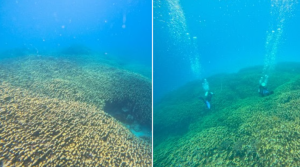
A large Pavona clavus coral colony, locally called the “Potato Patch”, has been documented near Kadmat Island in the Lakshadweep archipelago. The colony covers about 4,250 square metres and has been described as one of the world’s largest known living coral formations of its kind.
Potato Patch Coral Colony
Pavona clavus is a massive reef-building coral species found in tropical marine waters. The Lakshadweep colony begins on the reef flat at a depth of 5.2 metres and extends down a steep slope to about 20 metres in south-eastern Kadmat waters.
Size, Age and Living Cover
The colony’s area of 4,250 square metres is roughly half the size of an international football pitch. Preliminary estimates place its age between 700 and 1,800 years, and scientific dating is required for confirmation. A survey found 58.47% live coral tissue in the colony.
Coral Reefs in Lakshadweep
Lakshadweep is an Indian Union Territory in the Arabian Sea and contains coral atolls, reefs and lagoons. Kadmat Island is one of the inhabited islands of the archipelago, and its reef systems support marine biodiversity in shallow and deeper waters.
Marine Survey and Research Context
The colony was documented during a marine biodiversity survey at Kadmat Island. The work involved scientists from the Department of Science and Technology, Government of India, the Research and Environmental Education Foundation, and The Habitat Trust.
Important Facts for Exams
- Coral colonies are formed by repeated growth of coral polyps, which are small marine invertebrates.
- Pavona clavus belongs to the group of stony corals that build calcium carbonate skeletons.
- Coral bleaching occurs when corals lose symbiotic algae called zooxanthellae under stress conditions such as high sea temperature.
- Lakshadweep is India’s only coral atoll chain and lies in the Arabian Sea.
Related Coral Discovery in Lakshadweep
On 19 February 2026, a coral reef stretch with about 35 species was recorded in the north-east of Kalpeni Island. The reef extended for nearly 1.8 kilometres and covered about 12.99 hectares.
| Related | |
|---|---|