ISRO Opens Gaganyaan Astronaut Selection to Civilians
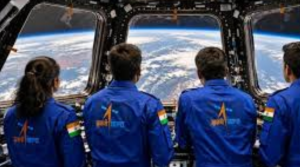
The Indian Space Research Organisation (ISRO) is preparing to select a second batch of astronauts for the Gaganyaan mission, expanding eligibility beyond Indian Air Force test pilots. For the first time, civilians from science, technology, engineering and mathematics (STEM) backgrounds may be included as India strengthens its long-term human spaceflight programme.
Second Astronaut Batch for Gaganyaan
The first batch of four astronauts was selected in 2020 only from Indian Air Force test pilots. They later underwent advanced training in Russia under Roscosmos, including survival drills, zero-gravity simulations and spacecraft operations. Now, ISRO plans a second astronaut group to support future missions.
Civilians from STEM Fields Included
Unlike the first round, the new selection is expected to include civilian professionals from STEM backgrounds along with military personnel. ISRO is considering a team of around 10 astronauts, including six military pilots and four civilian specialists, to create a more diverse and skilled astronaut corps.
Committee Designing Selection Process
ISRO has formed a dedicated committee with agency officials and current astronauts to prepare eligibility rules, training methods and evaluation systems. Existing astronauts such as Shubhanshu Shukla, Ajit Krishnan and Angad Pratap are helping build the next phase of astronaut training and infrastructure.
Important Facts for Exams
- Gaganyaan is India’s first human spaceflight mission planned by ISRO.
- The first astronaut batch in 2020 included only Indian Air Force test pilots.
- The second batch may include civilian STEM professionals for the first time.
- India aims to build a space station and send humans to the Moon by 2040.
India’s Long-Term Space Vision
The expansion reflects India’s broader plans beyond a single crewed mission. ISRO is working towards a sustained human spaceflight ecosystem, including future orbital missions, a national space station and a human Moon landing by 2040. Training facilities, living quarters and operational systems are also being developed to support a larger astronaut programme.
| Related | |
|---|---|