
Indian scientists develop low-cost zinc-air battery technology
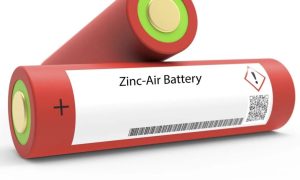
Indian researchers have developed multiple zinc-air battery technologies in 2024 and 2025, including low-cost electrolytes, catalysts, and mechanically rechargeable systems. Zinc-air batteries use zinc as the anode and oxygen from air as the cathode reactant, and they are studied as alternatives to lithium-ion batteries for stationary storage and electric vehicles.
Zinc-air battery basics
Zinc-air batteries are metal-air batteries that generate electricity through the oxidation of zinc and the reduction of oxygen from air. They use a zinc anode, an air cathode, and an electrolyte, which is often aqueous in rechargeable designs. Their chemistry allows high theoretical energy density and the use of abundant zinc metal.
Low-cost electrolyte and catalyst development
A team led by Dr. S. Devaraj at SASTRA Deemed University developed a nanofluid electrolyte for rechargeable zinc-air batteries with support from the Department of Science and Technology. The electrolyte uses silica and zinc oxide nanoparticles and remained stable for more than three months in laboratory conditions. The same team developed a copper-doped manganese dioxide catalyst and converted discarded household water-filter carbon and surgical face masks into carbon materials for battery use.
Mechanically rechargeable and electrically rechargeable systems
Researchers at the Indian Institute of Technology Madras, including Dr. Aravind Kumar Chandiran, are developing mechanically rechargeable zinc-air batteries for electric vehicles. Hindustan Zinc Limited signed an MoU with IIT Madras on 9 October 2024 to develop a 1 kWh electrically rechargeable zinc-air battery prototype. The prototype uses water-based electrolytes and no flammable materials.
Related Indian research in zinc-based batteries
On 26 April 2025, researchers at the Indian Institute of Science, including Professor Aninda J Bhattacharyya, developed a zinc-air battery system that also generates hydrogen peroxide and neutralises toxic textile dyes. On 28 November 2025, a Bengaluru-based team at CeNS, an autonomous institute under DST, developed an activation method for zinc-ion batteries.
Important Facts for Exams
- Zinc-air batteries belong to the broader class of metal-air batteries.
- Platinum and ruthenium are common noble-metal catalysts used in electrochemical systems.
- Water-based electrolytes are generally less flammable than organic electrolytes used in many lithium-ion batteries.
- Hindustan Zinc Limited is India’s largest zinc producer.
Cost and application areas
Zinc-air batteries are estimated at about USD 150 per kWh, while lithium-ion batteries are estimated at USD 200 to USD 250 per kWh. Wider adoption is projected to reduce zinc-air battery costs below USD 100 per kWh. Researchers are targeting two-wheelers, three-wheelers, and long-duration energy storage applications.
| Related | |
|---|---|



Nirmalkumar Wala
July 25, 2026 at 4:11 pmGo for sodium battery , they are 30$ perkwh and plenty of raw material. CATL has already introduced in cars and heavy trucks are also running in china