Important Military and Space Bases in the Arctic
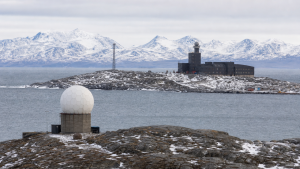
The Arctic has emerged as a major strategic zone because of its shipping routes, mineral wealth, and military value. Its harsh climate has not prevented Arctic states from building airfields, naval bases, radar sites, and space-monitoring facilities to secure territory and monitor missile threats. These installations now play a growing role in defense, surveillance, logistics, and scientific operations.
The Arctic Region: Strategic Overview
The Arctic Circle marks the northern polar region, where extreme cold, ice cover, and permafrost shape life and infrastructure. Eight states are considered Arctic nations: Canada, Denmark through Greenland, Finland, Iceland, Norway, Russia, Sweden, and the United States through Alaska. As sea ice melts, routes such as the Northern Sea Route and the Northwest Passage are becoming more navigable, reducing travel time between Europe and Asia.
This has increased interest in dual-use infrastructure such as ports, airstrips, and communication nodes that can serve both civilian and military purposes. The Arctic Council remains the leading intergovernmental forum for cooperation on Arctic issues, but its mandate explicitly excludes military security.
Russia’s Arctic Military Footprint
Russia has the largest military presence in the Arctic, supported by its long northern coastline and its focus on Arctic sea routes and resource access. It has modernized several Soviet-era airfields, radar stations, and logistics points across its far north. The Northern Fleet, based at Severomorsk on the Kola Peninsula, is the core of Russia’s Arctic military posture.
- Severomorsk Naval Base: Main base of the Northern Fleet and central to Russia’s Arctic naval operations.
- Murmansk: Major port city and support hub for nuclear icebreakers and submarines.
- Novaya Zemlya: Former Cold War nuclear testing site with current air defence infrastructure, including Rogachevo Airfield.
- Nagurskoye Air Base: Located on Franz Josef Land, it is one of Russia’s northernmost military outposts and is often referred to as the “Arctic Shamrock” base.
- Tiksi Air Base: An important air defence hub in the Sakha Republic.
- Kotelny Island and Wrangel Island: Additional Arctic bases that support Russia’s northern military network.
These facilities help Russia monitor the Arctic approaches, protect shipping corridors, and maintain a rapid-response military presence in the High North.
North American Arctic Bases
The United States and Canada maintain major Arctic installations for air defence, surveillance, space monitoring, and logistics. Their facilities are closely linked to broader North American warning systems and to the protection of the Arctic approaches.
- Eielson Air Force Base, Alaska: Near Fairbanks, it hosts F-35A fighter jets and supports Arctic air power projection and training.
- Joint Base Elmendorf-Richardson, Alaska: A key command, control, and transport hub in Anchorage.
- Clear Space Force Station, Alaska: An important sensor site for missile warning, missile defence, and space surveillance under the Overhead Persistent Infrared system.
- Pituffik Space Base, Greenland: The U.S. Space Force’s northernmost installation, formerly Thule Air Base until its 2023 renaming. It supports missile warning, missile defence, and space surveillance, and is linked to the Ballistic Missile Early Warning System.
- Narsarsuaq and Mestersvig: Locations identified for possible future defence areas in Greenland.
- CFS Alert, Canada: On northern Ellesmere Island, it is the world’s northernmost continuously inhabited place and serves as an intelligence and surveillance post.
- Nanisivik Naval Facility, Canada: A deep-water refuelling station on Baffin Island supporting Royal Canadian Navy operations in the Northwest Passage.
- Resolute Bay, Canada: A logistics hub and Arctic training location for the Canadian Armed Forces.
Canada also maintains facilities at Yellowknife, Whitehorse, Iqaluit, and Inuvik. In addition, Canada works with the United States through NORAD, which provides integrated aerospace warning and control for North America, including the Arctic.
Nordic Arctic Defence Infrastructure
Norway, Iceland, and Denmark play a significant role in Arctic security, especially through NATO-linked facilities and arrangements. Their bases support air policing, maritime patrol, surveillance, and rapid reaction operations.
- Bardufoss Air Station, Norway: A major air force base in Northern Norway that supports rapid reaction forces.
- Evenes Air Station, Norway: A forward operating base for F-35 fighter jets and P-8 Poseidon maritime patrol aircraft, and a primary NATO Quick Reaction Alert base in Europe.
- Olavsvern Naval Base, Norway: A former naval base near Tromsø that remains strategically significant despite private ownership.
- Camp Viking, Norway: A British military facility in Øverbygd, opened in March 2023, used as the UK’s High North operations hub and for Arctic warfare training.
- Svalbard: A Norwegian archipelago that is demilitarized under the 1920 treaty.
- Keflavik Air Base, Iceland: Iceland has no standing army, but Keflavik hosts NATO air policing missions and supports transatlantic air and sea operations.
- Greenland and Denmark: Greenland is an autonomous territory within the Kingdom of Denmark, and its location gives Denmark a key Arctic defence role.
The 1951 US-Danish Defence Agreement has long served as the legal basis for American military access to Greenland, making the island important for missile warning, logistics, and broader Arctic defence planning.
Arctic Space Infrastructure and Surveillance
The Arctic is also valuable for space operations because high latitudes improve the tracking of polar-orbiting satellites. Ground stations in the region can make more frequent contact with satellites, while radar sites can detect ballistic missile threats, monitor space debris, and track objects in orbit.
- Pituffik Space Base: A key integrated defence and space facility.
- Clear Space Force Station: Supports missile warning and space surveillance.
- Radar installations across the Arctic: Contribute to early warning and orbit-tracking functions.
- Missile warning systems: A major strategic function of Arctic-based facilities.
- Strategic logistics: Ports, airfields, and refuelling points are essential for sustaining operations in the High North.
Key Prelims Takeaways
- Eight Arctic nations: Canada, Denmark through Greenland, Finland, Iceland, Norway, Russia, Sweden, and the United States through Alaska.
- Arctic Council: Main forum for Arctic cooperation; military security is outside its mandate.
- Russia: The Northern Fleet is headquartered at Severomorsk and anchors Russia’s Arctic military network.
- Key Russian sites: Murmansk, Novaya Zemlya, Nagurskoye, Tiksi, Kotelny Island, and Wrangel Island.
- United States in Alaska: Eielson AFB, JBER, and Clear Space Force Station are major Arctic installations.
- Greenland: Pituffik Space Base is the U.S. Space Force’s northernmost installation and a core missile-warning site.
- Canada and Norway: CFS Alert, Nanisivik, Bardufoss, and Evenes are important Arctic defence locations.
Recent Context
On September 22, 2026, the United States, Denmark, and Greenland signed a new security agreement updating the 1951 defence framework. The pact allows modernization at Pituffik Space Base and permits additional defence areas at Narsarsuaq and Mestersvig, while also limiting sensitive military and investment activity by non-NATO and non-EU countries.
| Related | |
|---|---|