Important Laws and Rules for Indian Broadcasting
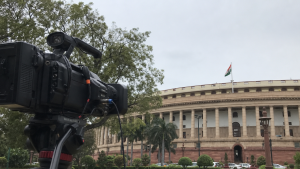
Broadcasting in India is regulated through a mix of statutes, government rules, and self-regulatory codes. The Ministry of Information and Broadcasting (MIB) and TRAI are the main authorities, while key laws govern cable TV, public broadcasting, sports signals, films, telecom-based services, and digital media.
Introduction to Indian Broadcasting Regulations
Historically, the state controlled airwaves under the Indian Telegraph Act, 1885. In Secretary, Ministry of Information and Broadcasting v. Cricket Association of Bengal (1995), the Supreme Court held that airwaves are public property, opening the sector to private broadcasters and wider media growth.
Airwaves are public property: the 1995 Supreme Court judgment became the foundation for modern broadcasting regulation in India.
Key Legislation in Indian Broadcasting
Cable Television Networks (Regulation) Act, 1995
- Purpose: Regulates cable television networks across India.
- Registration: Cable operators must register with the designated postal or state authority.
- Content format: Operators are required to transmit content in encrypted digital format.
- Compliance: Networks must follow the statutory Programme Code and Advertising Code.
- Advertisement cap: The 12-minute-per-hour advertisement ceiling under Rule 7(11) of the Cable Television Networks Rules, 1994 was removed by the Union Ministry of Information and Broadcasting on August 14, 2026, but the change takes effect only after notification in the Gazette of India.
Prasar Bharati (Broadcasting Corporation of India) Act, 1990
- Creation of Prasar Bharati: Established India’s autonomous public service broadcaster.
- Institutions covered: Brings Doordarshan and All India Radio under one public entity.
- Public service role: Mandates balanced news, education, and representation of diverse cultural views.
Sports Broadcasting Signals (Mandatory Sharing with Prasar Bharati) Act, 2007
- Mandatory sharing: Sports rights owners must share live signals of sporting events of national importance with Prasar Bharati.
- Access: Enables free-to-air viewing on terrestrial networks and Doordarshan’s free direct-to-home platform.
Telecommunications Act, 2023 and Draft Rules, 2026
- Replacement law: The Telecommunications Act, 2023 replaced the Indian Telegraph Act, 1885.
- Draft framework: In June 2026, MIB released the Draft Telecommunications (Television, Radio and Associated Services) Rules, 2026 for public consultation.
- Objective: The draft rules aim to consolidate scattered guidelines into a unified framework and improve ease of doing business.
- Coverage: Includes satellite TV uplinking and downlinking, DTH, FM radio, community radio stations, and IPTV.
Cinematograph Act, 1952
- Scope: Governs public exhibition of films in India.
- Certification: Establishes the Central Board of Film Certification (CBFC).
- Amendment: The Cinematograph (Amendment) Act, 2023 introduced stricter penalties for piracy.
- Age categories: Added age-based classifications such as UA 7+, UA 13+, and UA 16+.
Telecom Regulatory Authority of India (TRAI) Act, 1997
- Role: TRAI regulates telecom services as well as broadcasting and cable services.
- Functions: Determines tariffs, interconnection terms, and quality standards for television distribution platforms.
Information Technology Act, 2000 and IT Rules, 2021
- Coverage: The Information Technology (Intermediary Guidelines and Digital Media Ethics Code) Rules, 2021 govern digital news publishers and OTT platforms.
- Grievance redressal: Provides a three-tier mechanism for user complaints.
- Tier 1: Self-regulation by the publisher.
- Tier 2: Self-regulation by an independent body of publishers.
- Tier 3: Oversight by the central government.
Key Codes Governing TV Content
The Programme Code
- Prohibits content that: Offends good taste or decency.
- Prohibits content that: Directs attacks against religions or communities.
- Prohibits content that: Promotes communal violence or anti-national attitudes.
- Prohibits content that: Contains obscene, defamatory, or deliberate falsehoods.
- Prohibits content that: Criticizes friendly foreign countries.
The Advertising Code
- Standards: Commercials must not offend morality, decency, or religious susceptibilities.
- Consumer protection: Ads must not promote consumer exploitation or misleading claims.
- Restricted products: Infant milk substitutes, tobacco products, and alcoholic beverages cannot be directly advertised.
Proposed Reform: The Broadcasting Services (Regulation) Bill
- Objective: Proposed to replace the Cable Television Networks (Regulation) Act, 1995.
- Unified framework: Seeks a single regulatory structure for TV, cable, DTH, OTT platforms, and digital news.
- Content Evaluation Committees (CECs): Proposed for internal self-certification by broadcasters.
- Broadcast Advisory Council (BAC): Proposed to hear appeals and advise the government on code violations.
- Accessibility: Lays down standards such as subtitles, audio descriptions, and sign language for persons with disabilities.
Comparison of Regulatory Frameworks
| Broadcasting Platform | Primary Regulator | Key Legislation/Rules | Regulatory Oversight Model |
| Public Broadcaster (DD & AIR) | Prasar Bharati Board | Prasar Bharati Act, 1990 | Statutory autonomous body oversight |
| Cable & Satellite TV Channels | Ministry of Information and Broadcasting (MIB) | Cable Television Networks (Regulation) Act, 1995 | Programme and Advertising Codes |
| Over-the-Top (OTT) Platforms | Ministry of Information and Broadcasting (MIB) | Information Technology Rules, 2021 | Three-tier self-regulatory mechanism |
| Direct-to-Home (DTH) & HITS | Ministry of Information and Broadcasting (MIB) | Telecommunications Act, 2023 (Draft Rules 2026) | Licensing guidelines and technical parameters |
| Private FM Radio | Ministry of Information and Broadcasting (MIB) | Telecommunications Act, 2023 (Draft Rules 2026) | Grant of Permission Agreement (GOPA) conditions |
Recent Context
In August 2026, the government decided to remove the 12-minute-per-hour ad cap for TV channels to support competition with digital media. The amendment will apply only after formal notification in the Gazette of India.
Rare Facts for Prelims
- Doordarshan: It began as an experimental service in 1959 and later became India’s national public television broadcaster.
- All India Radio: AIR is one of the world’s largest radio networks by reach and language diversity.
- CBFC: Film certification in India is based on public exhibition, not a prior ban on all content.
- TRAI: It was originally created to regulate telecom, but its role later expanded into broadcasting and cable services.
- Sports signal sharing: The 2007 law is especially important for ensuring free access to major national sporting events.
- OTT regulation: India’s OTT governance is largely routed through digital media ethics rules rather than a separate standalone OTT law.
| Related | |
|---|---|