European Union: Member States, Institutions and Key Officeholders
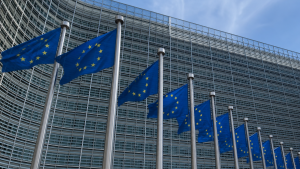
The European Union (EU) is a supranational and intergovernmental union of 27 European states. It combines shared institutions with negotiated decision-making to manage common policies on trade, agriculture, fisheries, regional development, and more.
For Prelims revision, the most useful areas are the EU’s evolution, the main institutions, and the key officeholders that shape policy, law, finance, and external relations.
Evolution and Membership
The EU grew out of post-World War II efforts to promote cooperation and reduce the chances of conflict in Europe.
- Early integration: The Treaty of Paris (1951) created the European Coal and Steel Community (ECSC).
- Expansion of economic cooperation: The Treaty of Rome (1957) established the European Economic Community (EEC).
- Maastricht Treaty (1992): Formally created the European Union and introduced the three-pillar structure covering the European Communities, Common Foreign and Security Policy, and Justice and Home Affairs.
- Lisbon Treaty: Entered into force on December 1, 2009. It abolished the three-pillar system, gave the EU a single legal personality, and created the permanent offices of the President of the European Council and the High Representative.
- Current membership: The EU has 27 member states after the exit of the United Kingdom on January 31, 2020. Croatia was the last country to join, in 2013.
- Copenhagen Criteria: An applicant state must have a stable democracy, a functioning market economy, and accept the entire body of EU law, known as the acquis communautaire.
Core Political Institutions
EU governance is spread across institutions with distinct executive, legislative, and policy-setting roles.
- European Commission: The executive organ of the EU. It has the sole right of legislative initiative in most policy areas, administers the budget, and enforces EU law. Ursula von der Leyen is the President of the European Commission.
- European Council: Composed of the heads of state or government of the member states, along with its President and the President of the European Commission. It sets the overall political direction but does not have formal legislative power. António Costa is the President of the European Council.
- European Parliament: The only directly elected EU body. It has 720 Members of the European Parliament (MEPs), elected every five years, and shares legislative and budgetary powers with the Council of the EU. Roberta Metsola is the President of the European Parliament.
- Council of the European Union: Also called the Council of Ministers. It consists of ministers from each member state and negotiates and adopts legislative acts, usually together with the European Parliament.
- High Representative: Kaja Kallas serves as the High Representative of the Union for Foreign Affairs and Security Policy and Vice-President of the European Commission.
Judicial and Financial Oversight
These institutions ensure legal uniformity, monetary stability, and accountability in the use of EU resources.
- Court of Justice of the European Union (CJEU): Based in Luxembourg, it ensures that EU law is interpreted and applied uniformly. It consists of the Court of Justice and the General Court.
- President of the Court of Justice: Koen Lenaerts.
- Vice-President of the Court of Justice: Thomas von Danwitz.
- President of the General Court: Marc van der Woude.
- European Central Bank (ECB): Based in Frankfurt, it manages the euro currency and frames monetary policy for the Eurozone.
- ECB President: Christine Lagarde.
- European Court of Auditors (ECA): The external auditor of the EU, responsible for monitoring the collection and spending of EU funds.
- ECA President: Tony Murphy.
- European Ombudsman: Investigates maladministration in EU institutions, bodies, offices, and agencies. Teresa Anjinho is the European Ombudsman.
Advisory and Specialized Bodies
Alongside the main institutions, the EU has consultative and financial bodies that support policymaking and project financing.
- European Investment Bank (EIB): The lending arm of the EU. It finances public and private sector projects that support EU policy goals inside and outside the Union. Nadia Calviño is the President of the EIB.
- European Economic and Social Committee (EESC): An advisory body made up of representatives of workers’ and employers’ organizations and other interest groups. Séamus Boland is the President for the 2025–2028 mandate.
- European Committee of the Regions (CoR): An advisory assembly representing local and regional authorities to ensure sub-national governments have a voice in EU policymaking. Kata Tüttő is the President.
Key Prelims Takeaways
- Lisbon Treaty: Made the ordinary legislative procedure the standard law-making route and strengthened the European Parliament.
- European Council: Sets broad political direction; it does not act as the main legislature.
- European Commission: Holds the main legislative initiative in most policy fields.
- European Parliament: The only directly elected EU institution.
- Eurozone: Has 20 EU member states using the euro; Denmark has an opt-out.
- Schengen Area: Includes 25 EU member states and 4 non-EU states; Ireland remains outside it.
- Council of the EU Presidency: Rotates every six months among member states in trios for continuity.
| Related | |
|---|---|