Important International Agreements on Armistice and Disengagement
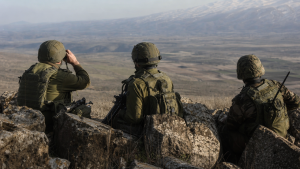
Armistice and disengagement agreements are designed to stop fighting, separate hostile forces and reduce the risk of renewed conflict. They are especially important in post-war flashpoints where ceasefire lines, buffer zones and international monitoring become central to stability. The Israel-Syria case in the Golan Heights remains a key example of how such arrangements work in practice — and how they can be tested.
Armistice and Disengagement: Core Concepts
An armistice is a formal agreement to stop fighting. It is not the same as a peace treaty; rather, it suspends hostilities and creates conditions for later political talks.
A disengagement agreement goes a step further by physically separating opposing forces. Such agreements usually create demilitarized zones, buffer areas or areas of separation, often under international supervision.
- Purpose: Reduce friction between armed forces and prevent accidental clashes.
- Mechanism: Fix withdrawal lines, troop limits and zones where military presence is restricted.
- Oversight: International observers or peacekeepers are often deployed to monitor compliance.
- Outcome: Create a more stable environment for negotiations and conflict settlement.
The 1974 Israel-Syria Disengagement Agreement
After the 1973 Arab-Israeli War (Yom Kippur War), Israel and Syria signed the Agreement on Disengagement of Forces on May 31, 1974. The pact established a ceasefire and set out a framework for separating the two armies along the Golan front.
The agreement was especially significant because the Golan Heights had been occupied by Israel during the 1967 Six-Day War. The 1974 arrangement aimed to prevent further fighting and reduce the chances of escalation in one of the Middle East’s most sensitive border zones.
- Ceasefire: Immediate halt to hostilities between Israeli and Syrian forces.
- Area of Separation: A buffer zone in the Golan Heights and adjoining southern Syrian areas.
- Restrictions: Military forces were not permitted to enter the separation area.
- Adjacency limits: Limits were imposed on forces and armaments in nearby zones.
- International role: A UN force was mandated to supervise observance of the agreement.
UNDOF and Monitoring Mechanism
The United Nations Disengagement Observer Force (UNDOF) was established by UN Security Council Resolution 350 on May 31, 1974. Its task is to supervise the ceasefire, observe the Area of Separation and maintain the stability of the line between Israel and Syria.
UNDOF operates through observation posts and patrols on the Golan front. Its presence is important because disengagement agreements depend not only on written terms but also on continuous monitoring, reporting and restraint by the parties.
Exam fact: UNDOF is the UN body directly linked to the 1974 Israel-Syria Disengagement Agreement and the Area of Separation.
- Mandate: Supervise the ceasefire and the Area of Separation.
- Function: Report violations and help maintain communication through neutral monitoring.
- Location: Deployed along the Golan front.
- Significance: A key stabilising mechanism under the 1974 framework.
Golan Heights and Mount Hermon
The Golan Heights is a rocky plateau in southwestern Syria and one of the most strategically important highlands in the region. Its elevated terrain offers military advantage, while its water resources add to its value.
Israel controls much of the area captured in 1967 and later annexed it in 1981, a move not recognised by the international community. The region borders Syria, Lebanon and Jordan, making it geopolitically sensitive.
Mount Hermon, near the junction of Syria, Lebanon and the Israeli-occupied Golan Heights, further increases the strategic importance of the area. Control over high ground in this zone affects surveillance, defence and access to the Jordan River basin.
The Sufa 53 Military Project
Israel’s Sufa 53 project, also called Great Storm or the Sufa Line, is an engineering and military undertaking in the southern Quneitra countryside of Syria. It involves a fortified military route, observation posts, deep trenches and earthen berms along the separation line near the Israeli-occupied Golan Heights.
The military road is about 8 metres wide, with berms reaching up to 5 metres in height. The project began in mid-2022 near Hader in northern Quneitra and later extended through Jubata al-Khashab, Al-Hamidiyah, Qahtaniyah, Bir Ajam, Bariqa and Al-Asha.
- Direction: The route extends towards the slopes of Mount Hermon.
- Geography: It approaches the tri-border area where Syrian, Jordanian and Israeli boundaries meet.
- Construction: Excavation has involved military bulldozers and heavy equipment.
- Impact: Syrian accounts say some construction has affected agricultural land in nearby communities.
- Claimed encroachment: Syrian sources allege Israeli troops moved 300 to 1,000 metres into the Area of Separation in some locations.
Key Prelims Takeaways
- Armistice: A formal halt to fighting, but not necessarily a peace treaty.
- Disengagement agreement: Separates armed forces and creates buffer zones or areas of separation.
- 1973 Arab-Israeli War: Also known as the Yom Kippur War; it preceded the 1974 agreement.
- May 31, 1974: Israel and Syria signed the Agreement on Disengagement of Forces.
- UN Security Council Resolution 350: Established UNDOF on May 31, 1974.
- UNDOF: Monitors the ceasefire and the Area of Separation on the Golan front.
- Golan Heights: Strategic plateau occupied by Israel in 1967 and annexed in 1981.
- Mount Hermon: Lies near the Syria-Lebanon-Israeli-occupied Golan junction.
- Sufa 53 project: Israeli military construction in southern Quneitra, involving roads, trenches and berms.
- International law angle: Buffer-zone violations raise questions of treaty compliance and conflict settlement.
Recent Context
Israel expanded its military presence in and around the buffer zone in southern Syria after December 2024, and the ongoing Sufa 53 project has drawn protests over alleged violations of the 1974 agreement. On October 4, 2026, Qatar, Jordan and Kuwait condemned the work, while Türkiye also strongly criticised renewed activity along the Sufa 53 line.
| Related | |
|---|---|