Important West Asian Mountains, Borders and Strategic Locations
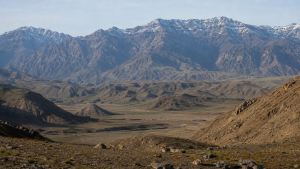
West Asia is shaped by mountains, narrow corridors, and contested borders that influence climate, settlement, defence, and trade. For Prelims, the region is important because many ranges act as natural boundaries, while a few straits and buffer zones remain central to energy flow and security.
Major Mountain Ranges
West Asia contains several major mountain systems that influence rainfall, transport routes, and political frontiers. Many of them have served as natural barriers between coastal plains, plateaus, and border regions.
- Taurus Mountains: Located in southern Turkey, they extend for about 1,500 km and separate the Mediterranean coastal region from the Anatolian plateau.
- Pontic Mountains: Running parallel to the Black Sea coast in northern Turkey, they are noted for biodiversity and rugged relief.
- Zagros Mountains: Stretching across Iran and northern Iraq for about 1,500 km, they form a natural divide and contain important oil fields.
- Elburz Mountains: Lying along the southern coast of the Caspian Sea in northern Iran, this range includes Mount Damavand, the highest peak in Iran and West Asia.
- Asir Mountains: Located in southwestern Saudi Arabia and extending into Yemen, they are known for relatively higher rainfall and cooler conditions.
- Mount Hermon: A strategically important mountain cluster near the junction of Syria, Lebanon, and the Israeli-occupied Golan Heights.
- Judean Mountains: A historic range in Israel and the West Bank, including Jerusalem.
- Anti-Lebanon Mountains: Running along the Lebanon-Syria border, parallel to the Lebanon Mountains.
Strategic Borders and Disputed Territories
West Asian borders are closely linked to war, occupation, armistice lines, and the legacy of colonial boundary-making. Several border zones remain sensitive because they affect military movement, civilian access, and territorial claims.
- Golan Heights: Occupied by Israel during the 1967 Six-Day War and unilaterally annexed in 1981. The UN Security Council declared the annexation “null and void”.
- Israeli-Syrian separation line: Established under the 1974 Disengagement Agreement after the 1973 Arab-Israeli War, it separates Israeli and Syrian forces.
- Tri-border area: The junction of Syrian, Jordanian, and Israeli boundaries, especially near Mount Hermon, making it highly sensitive for security monitoring.
- Gaza Strip and West Bank: Palestinian territories under Israeli occupation since 1967 and central to the Israeli-Palestinian conflict.
- Iraq-Iran border: Largely shaped by the Zagros Mountains and the Shatt al-Arab waterway; historically a flashpoint, including the Iran-Iraq War.
- Turkey-Syria border: A long and complex frontier affected by security operations, refugee movement, and Kurdish-related tensions.
Vital Waterways and Chokepoints
West Asia controls some of the world’s most important maritime chokepoints. These routes are vital for energy exports, global shipping, and military strategy, which is why even local tensions often have international effects.
- Strait of Hormuz: Connects the Persian Gulf to the Gulf of Oman. It is the world’s most important oil transit chokepoint; around one-fifth of global petroleum and a quarter of liquefied natural gas passes through it.
- Bab-el-Mandeb Strait: Links the Red Sea to the Gulf of Aden and the Indian Ocean. It lies between Yemen and the Horn of Africa region and is crucial for oil and gas shipping.
- Suez Canal: An artificial sea-level waterway in Egypt connecting the Mediterranean Sea to the Red Sea. It provides the shortest maritime route between Europe and Asia.
- Bosporus and Dardanelles Straits: Located in Turkey, these waterways connect the Black Sea region to the Aegean Sea and the Mediterranean, giving Black Sea states access to global sea routes.
International Agreements and Observer Forces
Several agreements and monitoring mechanisms attempt to manage disputes in the region. These arrangements are important for understanding ceasefire lines, buffer zones, and peace-making efforts in West Asia.
- 1974 Disengagement Agreement: Created a ceasefire and separation of forces between Israel and Syria after the 1973 Arab-Israeli War, including a buffer zone in the Golan Heights.
- UNDOF: The United Nations Disengagement Observer Force was established in 1974 by UN Security Council Resolution 350 to supervise the ceasefire line in the Golan Heights. Its mandate is renewed periodically.
- Camp David Accords (1978): Led to peace between Egypt and Israel and Israel’s withdrawal from the Sinai Peninsula.
- Oslo Accords (1990s): A set of agreements between Israel and the Palestine Liberation Organization aimed at Palestinian self-governance in the West Bank and Gaza Strip.
Key Prelims Takeaways
- Mount Hermon lies near the junction of Syria, Lebanon, and the Israeli-occupied Golan Heights.
- Golan Heights were occupied by Israel in 1967 and annexed in 1981.
- The 1974 Disengagement Agreement created the Israel-Syria separation line.
- UNDOF was set up in 1974 to monitor the ceasefire line in the Golan Heights.
- The Strait of Hormuz links the Persian Gulf and the Gulf of Oman.
- The Bab-el-Mandeb Strait connects the Red Sea with the Gulf of Aden.
- The Suez Canal connects the Mediterranean Sea with the Red Sea.
- The Taurus Mountains are in southern Turkey, while the Zagros Mountains extend across Iran and Iraq.
- The Elburz Mountains in Iran include Mount Damavand, the highest peak in West Asia.
Recent Context
The Israeli Sufa 53 project, also called Great Storm, is an engineering and military route being built in southern Quneitra, Syria, near the Golan Heights separation line. It extends towards Mount Hermon and the Syrian-Jordanian-Israeli tri-border area, with Syria calling it a violation of the 1974 Disengagement Agreement. Regional criticism has followed the work.
| Related | |
|---|---|