Important Flowering Plant Families in India and Himalayas
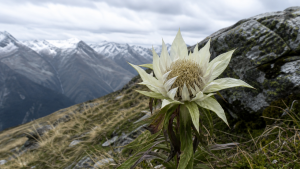
India and the Himalayas support exceptional flowering plant diversity, with many families showing strong ecological, medicinal, ornamental, and economic importance. Several of these families are especially characteristic of alpine, temperate, and humid Himalayan habitats.
Asteraceae (Sunflower Family)
The Asteraceae family, historically known as Compositae, is the largest dicotyledonous family in the high-altitude alpine regions of the Himalayas. Members of this family are easily recognized by their composite flower heads, called capitula.
- Key Genera: Saussurea, Anaphalis, Senecio, Artemisia, Cicerbita.
- Brahma Kamal (Saussurea obvallata): This is the state flower of Uttarakhand. It grows in rocky alpine terrains at extreme altitudes between 3,700 and 4,600 meters. The flower heads are purple but remain protected from cold mountain winds inside translucent, pale-yellow, papery bracts.
- Pearly Everlasting (Anaphalis): This genus is widespread in Himalayan meadows. Species like Anaphalis margaritacea are used in traditional medicine to treat coughs and respiratory issues.
- Ecology and Use: Many alpine Asteraceae are cushion plants that prevent soil erosion on steep slopes. They are sources of essential oils and traditional fever remedies.
Orchidaceae (Orchid Family)
The Orchidaceae family represents the second-largest group of flowering plants in India. It is highly concentrated in the humid zones of the Eastern Himalayas and Northeast India, particularly in Sikkim and Arunachal Pradesh.
- Key Genera: Dendrobium, Cymbidium, Cypripedium, Dactylorhiza, Paphiopedilum.
- Slipper Orchids (Cypripedium): Species like Cypripedium elegans are rare terrestrial orchids found on forest floors and high-altitude slopes, easily identified by their pouch-shaped floral lips.
- Panchaule (Dactylorhiza hatagirea): This terrestrial orchid grows in alpine wet meadows at altitudes above 2,800 meters. Local communities value its hand-shaped tuberous roots for Ayurvedic and Unani medicinal formulations. Over-extraction has made this species endangered.
- Ecological Adaptation: Orchids occupy diverse niches, living as epiphytes on tree trunks in subtropical foothills or as hardy terrestrial herbs in alpine climates.
Ericaceae (Heath and Rhododendron Family)
The Ericaceae family is a defining feature of the temperate, sub-alpine, and alpine forest zones of the Himalayas. The genus Rhododendron dominates this family in India and acts as a biological indicator of climatic shifts.
- Key Genera: Rhododendron, Cassiope, Gaultheria.
- Tree Rhododendron (Rhododendron arboreum): This evergreen tree is the state tree of Uttarakhand and the state flower of Nagaland. It holds the Guinness World Record for the tallest rhododendron, with a specimen on Mount Japfü in Nagaland reaching 20 meters in height.
- Altitudinal Variation: The species displays vibrant crimson-red flowers in lower temperate forests between 1,500 and 3,000 meters. It transitions to pink and white flowers at higher, colder elevations.
- Ecological Role: Rhododendrons serve as keystone species in Himalayan ecosystems. They sustain local insect and bird communities with abundant early-spring nectar.
Rosaceae (Rose Family)
The Rosaceae family is of massive economic value to India, especially across the Western Himalayan states of Jammu & Kashmir, Himachal Pradesh, and Uttarakhand. It includes both high-value fruit crops and wild ornamental shrubs.
- Key Genera: Rosa, Prunus, Malus, Pyrus, Potentilla, Cotoneaster.
- Horticultural Crops: Major temperate fruits like apples (Malus domestica), pears (Pyrus communis), peaches, plums, and almonds (Prunus species) belong to this family. These crops form the backbone of the Himalayan rural economy.
- Alpine Wildflowers: Species like Potentilla indica (mock strawberry) and Potentilla atrosanguinea (crimson cinquefoil) decorate high-altitude meadows with yellow and red flowers during the summer monsoon.
- Soil Conservation: Wild shrubs like Rosa webbiana are utilized for slope stabilization and mountain bio-fencing.
Ranunculaceae (Buttercup Family)
The Ranunculaceae family consists mostly of herbaceous perennial plants that thrive in wet alpine meadows, glacial streams, and rocky screes.
- Key Genera: Aconitum, Anemone, Clematis, Delphinium, Ranunculus.
- Monkshood (Aconitum): Species like Aconitum ferox and Aconitum heterophyllum are known as monkshood. They contain highly toxic alkaloids. Traditional medicine systems utilize these roots extensively after executing specific purification processes.
- Windflowers (Anemone): Species like Anemone tetrasepala produce abundant white and pink blooms that carpet meadows immediately after winter snow melt.
- Grazing Defense: Many species secrete acrid chemical compounds that deter livestock, allowing them to populate overgrazed pastures.
Gentianaceae (Gentian Family)
The Gentianaceae family is highly represented in high-altitude marshes, rocky slopes, and moist meadows. It is characterized by vibrant, tubular flowers that bloom in the late monsoon and autumn.
- Key Genera: Gentiana, Swertia, Halenia.
- Chirata (Swertia chirayita): This critically important medicinal herb grows in the temperate Himalayas at altitudes of 1,200 to 3,000 meters. The entire plant is extremely bitter and is harvested for traditional anti-malarial, anti-inflammatory, and liver-tonic remedies.
- Gentians (Gentiana): Known for deep blue, purple, and yellow trumpet-shaped flowers, these plants dominate high-altitude meadows up to 5,000 meters and attract alpine pollinators.
Fabaceae (Legume or Pea Family)
The Fabaceae family is one of the most widely distributed flowering families across the Indian subcontinent. It spans from coastal plains to the dry, cold deserts of the trans-Himalayas.
- Key Genera: Astragalus, Crotalaria, Dalbergia, Acacia, Cajanus.
- Cold Desert Adaptation: In dry, high-altitude regions like Ladakh and Lahaul-Spiti, species of Astragalus are dominant. They survive extreme dry winds and low temperatures.
- Soil Enrichment: These plants form root nodules hosting Rhizobium bacteria to fix atmospheric nitrogen. This process enriches nutrient-poor mountain soils, paving the way for other plant species.
- Economic Value: The family includes major pulse crops like chickpeas (Cicer arietinum) and pigeon peas (Cajanus cajan), as well as high-value timber trees like rosewood (Dalbergia latifolia).
Zingiberaceae (Ginger Family)
The Zingiberaceae family consists of aromatic herbaceous plants that populate the warm, humid tropical and subtropical forest regions of India, with maximum diversity in Northeast India and the Western Ghats.
- Key Genera: Zingiber, Curcuma, Hedychium, Amomum.
- Spiked Ginger Lily (Hedychium spicatum): Locally known as Kapoor Kachri, this species grows in the subtropical Himalayan foothills. Its aromatic rhizomes yield essential oils used in cosmetics, perfumes, and traditional respiratory medicine.
- Agricultural Importance: This family contains highly valued spices and medicinal plants, including turmeric (Curcuma longa), ginger (Zingiber officinale), and black cardamom (Amomum subulatum).
Brassicaceae (Mustard Family)
The Brassicaceae family, historically called Cruciferae, contains species that are vital to India’s agricultural plains and highly resilient wild herbs in alpine mountains.
- Key Genera: Brassica, Crucihimalaya, Arabis.
- Edible Oils: Cultivated Brassica species, including mustard (Brassica juncea) and rapeseed, are primary sources of edible oil across northern India.
- Alpine Extremophiles: Genera like Crucihimalaya include species such as Crucihimalaya himalaica (Himalayan rock-cress). These small plants grow in barren gravel and rock crevices near glaciers, showing high tolerance to intense UV radiation and sub-zero temperatures.
Lamiaceae (Mint Family)
The Lamiaceae family is globally recognized for aromatic oil glands. It is widely distributed across the Indian subcontinent, from coastal areas to high-altitude pastures.
- Key Genera: Ocimum, Mentha, Salvia, Origanum, Thymus.
- Holy Basil (Ocimum sanctum): Locally called Tulsi, it is cultivated throughout India for its sacred, adaptogenic, and medicinal properties.
- Himalayan Thyme (Thymus linearis): Found in the temperate and alpine zones of the Western Himalayas, this creeping herb is used locally as a spice and for treating respiratory ailments.
Summary of Key Flowering Plant Families in India and Himalayas
| Family | Major Genera | Notable Representative | Key Value |
| Asteraceae | Saussurea, Anaphalis, Senecio | Brahma Kamal (Saussurea obvallata) | Soil binding, alpine adaptations, traditional medicine |
| Orchidaceae | Dendrobium, Cypripedium, Dactylorhiza | Panchaule (Dactylorhiza hatagirea) | High ornamental value, traditional tonics, bio-indicators |
| Ericaceae | Rhododendron, Cassiope, Gaultheria | Tree Rhododendron (Rhododendron arboreum) | Keystone species, early spring nectar, climate change indicator |
| Rosaceae | Malus, Prunus, Rosa | Apple (Malus domestica) | Temperate fruit industry, wild rose hips, soil conservation |
| Ranunculaceae | Aconitum, Anemone, Clematis | Indian Monkshood (Aconitum ferox) | High alkaloid content, potent medicinal and toxic extracts |
| Gentianaceae | Gentiana, Swertia | Chirata (Swertia chirayita) | Fever remedies, hepatoprotective drugs, pollinator attractants |
| Fabaceae | Astragalus, Dalbergia, Acacia | Milkvetch (Astragalus species) | Nitrogen fixation, primary soil enricher, high-value timber |
| Zingiberaceae | Zingiber, Curcuma, Hedychium | Spiked Ginger Lily (Hedychium spicatum) | Essential oils, culinary spices, cosmetic manufacturing |
| Lamiaceae | Ocimum, Mentha, Thymus | Holy Basil (Ocimum sanctum) | Aromatic herbs, adaptogens, traditional cough remedies |
Recent Context
Impatiens nimspurjae was first described in PLOS ONE in October 2022 after being collected from western Myagdi, Nepal. The species has since drawn attention for conservation planning and for honoring mountaineer Nirmal “Nimsdai” Purja.
Rare Facts for Prelims
- Asteraceae: The family name comes from the Greek word for “star,” referring to the ray florets in many flower heads.
- Orchidaceae: Orchid seeds are among the smallest in flowering plants and usually need fungal partners to germinate.
- Rhododendron arboreum: Its flowers are edible and are sometimes used to make juice and local preparations in the Himalayas.
- Fabaceae: Root nodules in legumes are a classic example of symbiosis between plants and nitrogen-fixing bacteria.
- Brassicaceae: Mustard family plants typically have four-petalled flowers arranged in a cross-like pattern.
- Impatiens: Many species in this genus disperse seeds explosively when ripe, a useful identification clue in the field.
| Related | |
|---|---|