List of United Nations International Days and Observances
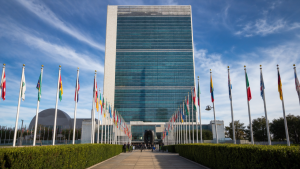
The United Nations marks international days, weeks, months, years, and decades to highlight global issues, build awareness, and encourage coordinated action. These observances are used as educational and advocacy tools across subjects such as health, environment, peace, human rights, and development.
History and Purpose of UN Observances
UN observances give the international community a common calendar to focus attention on important challenges and achievements. Many of them carry an annual theme chosen by the lead agency, helping shape campaigns and policy discussions around a specific issue.
- Origin of the practice: The first UN observance was United Nations Day, declared on October 24, 1947.
- Purpose: These observances raise awareness, mobilize political attention, and support advocacy for development, peace, and human rights.
- Annual themes: Some observances, such as World Environment Day and World Water Day, are marked with changing themes each year.
- Nature of observances: They are not legally binding treaties, but they help build consensus and focus state action.
- Who declares them: Most are adopted by the UN General Assembly through resolutions proposed by Member States.
- Agency-led observances: Some are proclaimed by specialized UN agencies such as UNESCO, WHO, and FAO.
- Scale: The UN system currently recognizes and observes over 218 international days annually.
Resolution 79/327 and Administrative Reforms
As the number of proposals for new observances grew, the General Assembly introduced a temporary mechanism to streamline the process and reduce administrative pressure on the UN Secretariat and Member States.
- Resolution: Resolution 79/327 was adopted on September 5, 2025.
- Objective: It aims to revitalize the work of the General Assembly and manage the rising volume of observance proposals.
- Temporary hold: A trial-basis pause applies to new proposals for international days, weeks, months, years, and decades.
- Coverage: The hold remains in force during the 81st and 82nd sessions of the General Assembly.
- Grouping rule: From the 81st session, the President of the General Assembly must compile proclamation requests into a single resolution for each agenda item.
- Separate paragraphs: Each proposed observance must be placed in its own operative paragraph within the grouped resolution.
- Review: The General Assembly will assess the practical impact of this pause during its 83rd session.
Recently Designated International Days
The General Assembly continues to add new observances where it sees global significance, including recent designations linked to sport and biodiversity.
- World Football Day: Adopted in May 2024 and observed annually on May 25.
- Significance of World Football Day: It commemorates the 100th anniversary of the first international football tournament with regional representation at the 1924 Summer Olympic Games in Paris.
- International Day of the Markhor: Also established in May 2024 and observed annually on May 24.
- Markhor focus: It supports the protection and conservation of the markhor, a mountain species native to Central and South Asia.
Upcoming UN International Years (2026–2029)
The UN General Assembly also designates special years to mobilize action and resources on selected issues. These upcoming international years have already been approved by resolution:
| Year | Designation | Resolution |
| 2026 | International Year of the Woman Farmer | A/RES/78/279 |
| 2026 | International Year of Volunteers for Sustainable Development | A/RES/78/127 |
| 2026 | International Year of Rangelands and Pastoralists | A/RES/76/253 |
| 2027 | International Year of Legal Literacy | A/RES/80/115 |
| 2027 | International Year of Sustainable and Resilient Tourism | A/RES/78/260 |
| 2028 | Year of International Law | A/RES/80/295 |
| 2029 | International Year of Asteroid Awareness and Planetary Defence | A/RES/79/86 |
Key Prelims Takeaways
- First UN observance: United Nations Day was declared on October 24, 1947.
- Purpose: UN observances are used for awareness, advocacy, and political mobilization, not as binding treaties.
- Volume: The UN system recognizes and observes over 218 international days annually.
- Designation process: Most observances are adopted by the General Assembly; some are declared by agencies such as WHO, FAO, and UNESCO.
- Resolution 79/327: Adopted on September 5, 2025, it introduced a temporary pause on new observance proposals.
- Session framework: The pause applies to the 81st and 82nd sessions, with review scheduled for the 83rd session.
- Recent observances: World Football Day is observed on May 25, and the International Day of the Markhor on May 24.
| Related | |
|---|---|