National Cultural Institutions and Museums of India
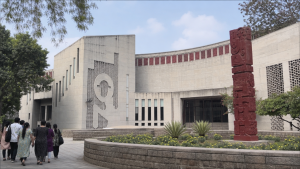
India’s national cultural institutions preserve, promote and digitize the country’s literary, artistic and historical heritage. Most of these bodies function under the Union Ministry of Culture and are important for Prelims because of their founding years, mandates, and current institutional developments.
Major National Academies
The three national academies form the core institutional framework for promoting literature, performing arts and visual arts in India.
- Sahitya Akademi was established in 1954 and promotes literature in 24 languages.
- Sangeet Natak Akademi, founded in 1953, is the apex body for music, dance and drama.
- Lalit Kala Akademi was set up in 1954 and works for the promotion of visual arts and fine arts.
- Sahitya Akademi recognizes literary works in 24 languages, including the 22 languages in the Eighth Schedule of the Constitution, plus English and Rajasthani.
- Sangeet Natak Akademi also supports intangible cultural heritage and supervises regional centres.
- Lalit Kala Akademi is the national academy for visual arts and remains a key body for exhibitions, grants and art promotion.
| Academy | Founded | Leadership (2026) | Primary domain |
| Sahitya Akademi | 1954 | President: Madhav Kaushik; Vice President: Prof. Kumud Sharma | Literature |
| Sangeet Natak Akademi | 1953 | Chairman: Dr. Sandhya Purecha; Vice President: Joravarsinh Jadav | Performing arts |
| Lalit Kala Akademi | 1954 | Chairman: Prof. V. Nagdas; Vice President: Dr. Nand Lal Thakur | Visual arts |
National Museum of India and Yuge Yugeen Bharat Project
The national museum system is being reshaped through the proposed Yuge Yugeen Bharat National Museum on Raisina Hill, linked to the Central Vista redevelopment project.
- National Museum of India at Janpath, New Delhi, was established in 1949 and its present building opened in 1960.
- The museum holds around 200,000 works of art spanning nearly 5,000 years across 22 galleries.
- After the collection is shifted to the new facility, the current Janpath building is to be repurposed for government offices.
- Yuge Yugeen Bharat National Museum is planned on Raisina Hill as a new central museum space.
- The project will cover 155,000 square metres and include 950 rooms over three storeys and a basement.
- The museum is expected to be the largest in the world and will showcase between 80,000 and 100,000 artefacts.
- It is planned around 30 thematic galleries and is being developed with French museum specialists and design consultancy bidder Arcop Associates.
Heritage Conservation and Infrastructure Schemes
Central schemes support monument upkeep, pilgrimage infrastructure and tourism-linked heritage development.
- Adopt a Heritage 2.0, launched in September 2023, seeks corporate participation to improve visitor amenities at monuments protected by the Archaeological Survey of India (ASI).
- The scheme had 30 signed Memorandums of Understanding (MoUs) by March 2026.
- PRASHAD stands for Pilgrimage Rejuvenation and Spiritual, Heritage Augmentation Drive.
- It focuses on developing infrastructure at pilgrimage destinations.
- By February 2026, PRASHAD had sanctioned 54 projects across 28 States and Union Territories.
- 32 projects had been completed by December 2025.
- Swadesh Darshan supports integrated tourism infrastructure development across 15 thematic circuits.
- By March 2026, 76 projects had been sanctioned under the scheme and 75 completed.
Digitisation and Antiquities Repatriation
Digitisation and international cooperation are being used to document museum collections and recover Indian antiquities from abroad.
- JATAN virtual museum software powers the Museums of India national portal.
- As of July 15, 2026, 3,75,707 artefacts out of 4,88,983 had been digitized.
- The digitisation covered 8 national-level museums and 2 ASI site museums.
- 615 antiquities and sacred relics were retrieved between June 2021 and June 30, 2026.
- The returned items included the Piprahwa relics of Lord Buddha, brought back in 2025.
Important Institutional Facts
- Ministry of Culture administers India’s major national cultural bodies and museum-related projects.
- Union Minister: Shri Gajendra Singh Shekhawat.
- Minister of State: Rao Inderjit Singh.
- Lalit Kala Akademi: In March 2024, the ministry curtailed the administrative and financial powers of its Chairman, Prof. V. Nagdas.
- Yuge Yugeen Bharat: Phase 1 completion is targeted for 2028.
- National Museum collections: The Janpath museum remains one of the most important repositories of India’s heritage.
- Digital museum records: JATAN is a key platform for museum documentation and access.
Key Prelims Takeaways
- Sahitya Akademi was founded in 1954 and recognizes literature in 24 languages.
- Sangeet Natak Akademi was founded in 1953 and is the apex body for music, dance and drama.
- Lalit Kala Akademi was founded in 1954 and promotes visual arts.
- National Museum of India was established in 1949; its present building opened in 1960.
- Yuge Yugeen Bharat National Museum is planned as the world’s largest museum on Raisina Hill.
- Adopt a Heritage 2.0, PRASHAD and Swadesh Darshan are major schemes linked to heritage and tourism infrastructure.
- JATAN software is central to museum digitisation under the Museums of India portal.
| Related | |
|---|---|