Gujarat Builds First Air-Filled Rubber Dams
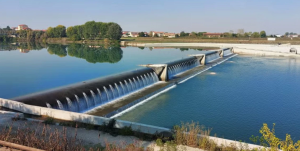
Gujarat is constructing its first two air-filled rubber dams across the Heran River in Chhota Udepur district and the Ambika River in Tapi district. The projects use South Korean technology and are designed for water storage, irrigation, and flood management.
Air-Filled Rubber Dam
An air-filled rubber dam is a flexible hydraulic structure made of a rubber bladder anchored across a river or canal. The bladder is inflated with air or water to raise the water level and deflated during high flows to allow water and silt to pass.
Project Locations and Cost
The Rajvasana Rubber Dam is being built at Rajvasana village in Chhota Udepur district, and the Pathakwadi Rubber Dam is being built at Pathakwadi village in Tapi district. The combined cost of the two projects exceeds ₹162 crore, with the Rajvasana project costing over ₹82.97 crore and the Pathakwadi project costing over ₹79.13 crore.
Construction Status and Irrigation Coverage
The Rajvasana Rubber Dam is 75% complete as of 6 July 2026 and is expected to be commissioned by September 2027. It is designed to irrigate 3,420 hectares of farmland across 25 villages. The Pathakwadi Rubber Dam is about 90% complete and is designed to provide assured irrigation to about 650 hectares of agricultural land in Pathakwadi and nearby villages.
Technical Features
Both dams use a specially engineered rubber bladder imported from South Korea. The bladder is between 18 mm and 32 mm thick, is built to withstand temperatures above 50 degrees Celsius, and has an estimated service life of 30 years. The dams also use SCADA-based automation systems for inflating and deflating the rubber bladders according to operational needs.
Flood Management Function
When deflated during heavy monsoon flows, the rubber structures allow floodwaters and silt to pass through the river channel. This design is used in river regulation works and in flood-prone stretches where temporary storage and controlled release are required.
Important Facts for Exams
- SCADA stands for Supervisory Control and Data Acquisition and is used in automated monitoring systems.
- Rubber dams are also called inflatable dams in hydraulic engineering.
- The Centre’s Catch the Rain campaign is linked to rainwater harvesting and water conservation.
- South Korea is a major source of specialised industrial rubber technology used in water infrastructure projects.
Water Conservation Context
Gujarat has used river-based irrigation and storage structures in several districts for agricultural supply. The two rubber dams are part of water conservation and irrigation infrastructure under the Centre’s Catch the Rain campaign.
| Related | |
|---|---|