Francis Halzen Wins 2026 Nobel Prize in Physics
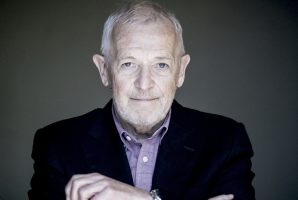
Francis Halzen, a Belgian particle physicist and professor at the University of Wisconsin-Madison, received the 2026 Nobel Prize in Physics on 6 October 2026. The Royal Swedish Academy of Sciences awarded the prize for decisive contributions to the IceCube Neutrino Observatory and the discovery of high-energy neutrinos of astrophysical origin.
Nobel Prize in Physics
The Nobel Prize in Physics is one of the five original Nobel Prizes established by the will of Alfred Nobel in 1895. It is awarded by the Royal Swedish Academy of Sciences for discoveries and inventions in physics. The 2026 prize amount is 12 million Swedish kronor, which is about $1.2 million.
IceCube Neutrino Observatory
The IceCube Neutrino Observatory is a cubic kilometre detector located at the South Pole in Antarctica. It uses light sensors embedded in clear glacial ice to detect flashes of light produced when neutrinos interact with atomic nuclei. The observatory became operational in 2010 and was completed in 2011.
Neutrinos and astrophysical origin
Neutrinos are electrically neutral subatomic particles with very small mass. They interact weakly with matter and can pass through the Earth and human bodies with little interaction. High-energy neutrinos from astrophysical origin provide information about cosmic accelerators, including violent processes in the distant universe.
Important Facts for Exams
- Francis Halzen first proposed the South Pole neutrino-detection idea in 1988.
- IceCube recorded the first high-energy extraterrestrial neutrinos in 2013.
- The South Pole site offers stable ice and low interference for particle detection.
- Neutrino astronomy is used to study sources that cannot be observed through visible light alone.
Scientific leadership and research use
Halzen is known for his scientific leadership in building IceCube as an international research facility. The observatory helps scientists study cosmic particle sources and search for previously unknown phenomena in high-energy astrophysics.
| Related | |
|---|---|