China’s Brahmaputra Dam Faces Fault Line Risk
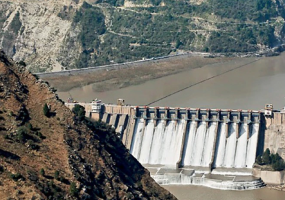
China’s mega hydropower project on the Yarlung Tsangpo River in Tibet has been linked to the active Paizhen Fault, which lies directly beneath the dam site in Medog County. The project is also known as the Yarlung Tsangpo downstream hydropower station and the Medog Hydropower Station, and construction formally began in July 2025.
Project Location and Scale
The dam is being built in Medog County, Tibet, about 50 km from the border with India’s Arunachal Pradesh. The project cost has been placed at 167.8 billion, while some reports have cited figures of 137 billion and $147 billion.
Paizhen Fault and Seismic Setting
The Paizhen Fault has remained active since the Pleistocene, which is the geological epoch commonly called the Ice Age. The fault continues to show seismic activity, and the study linked this activity to risks for the dam foundation, roads, bridges, tunnels, and other associated infrastructure. Geologists stated that prolonged fault movement has fractured and weakened local rock formations. The same geological conditions increase the possibility of landslides, collapses, and damage under regional seismic action and long-term water immersion.
Hydropower and Engineering Features
The project is projected to generate more than 300 billion kWh of electricity each year. This output is stated to be sufficient for the power needs of more than 300 million people. Engineers were urged to strengthen vulnerable slopes and install retaining structures. Such measures are standard geotechnical methods used in large mountain infrastructure projects.
Important Facts for Exams
- The Yarlung Tsangpo River is the upper course of the Brahmaputra River in Tibet.
- Medog County lies in the Nyingchi prefecture of the Tibet Autonomous Region.
- The Pleistocene is the geological epoch that began about 2.58 million years ago.
- The China Geological Survey is a state-owned geological institution in China.
Official Position and Safety Claims
China stated in December 2024 that the hydropower project meets high industry standards and gives priority to ecological protection. The project remains one of the largest hydropower developments planned on the Tibetan Plateau.
| Related | |
|---|---|