Cabinet Approves Multitracking Railway Projects
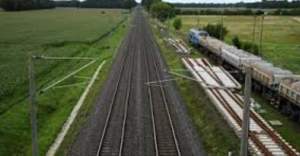
The Union Cabinet has approved multitracking railway projects across 19 districts in India. Railway multitracking refers to the construction of additional railway lines on existing or new corridors to increase line capacity, reduce congestion, and improve train movement on busy routes.
Project Scope
The approved works cover railway connectivity across 19 districts. Multitracking projects are generally taken up on saturated routes where single or double lines face heavy traffic and operational constraints.
Railway Multitracking in India
Indian Railways uses multitracking to expand capacity on trunk routes, freight corridors, and suburban sections. Such projects are usually executed by the Ministry of Railways through its zonal railways and construction units.
Key Features of Multitracking
- Multitracking adds one or more railway lines to an existing route.
- It supports higher train frequency on the same corridor.
- It helps separate fast and slow traffic on busy sections.
- It is used on both passenger and freight-intensive routes.
Important Facts for Exams
- Indian Railways is one of the largest railway networks in the world under a single administration.
- Railway projects in India are commonly classified as new lines, gauge conversion, and doubling or multitracking.
- Multitracking is a capacity augmentation measure used on high-density railway routes.
- The Union Cabinet approves major infrastructure proposals involving central government expenditure.
Railway Infrastructure Context
Railway capacity expansion is linked with freight movement, passenger services, and network efficiency. Multitracking is one of the standard methods used for infrastructure augmentation in the railway sector.
| Related | |
|---|---|