The Consumer Price Index (CPI) is a key statistical measure that tracks the average change in the prices of goods and services consumed by households over time. It...
The Consumer Price Index (CPI) is one of the most significant measures of inflation, reflecting changes in the average price level of a basket of goods and services...
The food index consists of two sub components, namely primary food articles and manufactured food products. The overall weight of the composite food index in the WPI is...
The above Charts shows that in the current financial year, the average inflation (April–December 2010) of 9.4 per cent was also much higher than the decadal rate. It...
The Wholesale Price Index (WPI) is an important economic indicator used to measure changes in the overall price level of goods traded in the wholesale market. It reflects...
Monetary developments refer to the changes in a country’s money supply, credit flow, interest rates, and financial conditions that collectively influence economic growth, inflation, and financial stability. In...
Liquidity management has evolved from being a traditional treasury function focused on maintaining adequate cash balances to a strategic discipline that directly influences financial stability, profitability, and corporate...
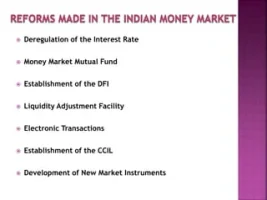
The money market represents the segment of the financial system that deals with short-term borrowing, lending, and investment, typically for maturities of up to one year. It plays...
The year 2010–11 was a significant period in India’s monetary and financial history, reflecting a phase of post-crisis recovery, monetary tightening, and controlled liquidity management by the Reserve...
The Survey Notes on Monetary Developments provide a comprehensive overview of the trends, movements, and policy actions related to the monetary sector of the Indian economy. These notes...
Admiral Vladimir Vysotsky is the commander in chief of the Russian Navy. He recently visited India on the invitation of Admiral Nirmal Verma. There was a discussion...