Wildlife Institute of India Society Holds 28th Meeting
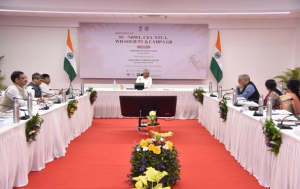
The 28th Meeting of the reconstituted Wildlife Institute of India (WII) Society was held on 9 July 2026 at the Central Academy for State Forest Service (CaSFOS) in Coimbatore. Union Minister for Environment, Forest and Climate Change Bhupender Yadav, who is the President of the WII Society, presided over the meeting.
Wildlife Institute of India
The Wildlife Institute of India is an autonomous institution under the Ministry of Environment, Forest and Climate Change. It functions as a national centre for wildlife research, training, and advisory support in India.
Society Structure and Tenure
The meeting was the first after the reconstitution of the WII Society for a three-year tenure. The previous members’ terms expired in April 2026, and the new body included nominated and ex-officio members.
Institutional Priorities
The meeting discussed the alignment of WII’s research, training, and policy-support framework with the national vision of Viksit Bharat @ 2047. The institutional roadmap placed focus on human-wildlife conflict resolution, technology-driven management, and capacity building.
Important Facts for Exams
- The Wildlife Institute of India is based in Dehradun, Uttarakhand.
- The Ministry of Environment, Forest and Climate Change is the administrative ministry for the Wildlife Institute of India.
- Human-wildlife conflict is a major conservation issue in India and is linked to habitat fragmentation and land-use change.
- Capacity building in wildlife management includes training in field ecology, wildlife law, and protected area management.
Meeting Participation
Dr. G.S. Bhardwaj, Director of WII and Member-Secretary of the Society, presented an overview of the institute’s achievements and current priorities. The meeting also included participation from Member of Parliament Atul Garg and Gujarat State Minister for Forest and Environment Pravin Mali.
Scientific Roadmap
The Society approved an agenda for the institute’s scientific goals for the next three years. WII’s work areas include wildlife research, biodiversity conservation, and technical support for wildlife management in India.
| Related | |
|---|---|