Types of Mineral Beneficiation Processes
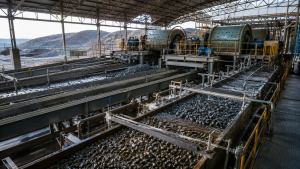
Mineral beneficiation is the set of physical and mechanical processes used to upgrade mined ore by separating valuable minerals from waste rock. It is a key value-addition step in mining because it improves ore quality, reduces smelting costs, and prepares material for downstream metallurgical use.
Mineral Beneficiation: Meaning and Purpose
Mineral beneficiation, also called mineral processing or ore dressing, aims to transform low-grade ore into a higher-value concentrate. The process depends on differences in physicochemical properties such as density, magnetic susceptibility, electrical conductivity, and surface wettability. By removing gangue, beneficiation improves recovery, supports industrial efficiency, and reduces the volume of material sent for further processing.
- Value addition: Converts low-grade ore into saleable concentrates.
- Cost reduction: Lowers the burden on smelting and refining.
- Industrial efficiency: Produces material suited for metallurgical operations.
- Waste reduction: Cuts down the amount of barren rock handled downstream.
Comminution: Crushing and Grinding
Comminution is the first and most energy-intensive stage of beneficiation. It reduces the size of mined ore so that valuable minerals can be freed from the surrounding gangue.
- Crushing: Large ore pieces are broken into smaller fragments using jaw, gyratory, or cone crushers.
- Grinding: Further size reduction takes place in ball mills or rod mills, which produce fine particles for separation.
- Liberation: The main objective is to release valuable mineral particles from waste rock so they can be separated effectively.
- Iron ore fines and slimes: Small-sized mining by-products that often require beneficiation before use.
Sizing and Classification
After comminution, the ore is sorted by particle size so that suitable material enters the next separation stage. This improves the efficiency of concentration methods and avoids mixing coarse and fine fractions.
- Screening: Uses screens with specific apertures to separate particles into size fractions.
- Classification: Uses hydrocyclones or mechanical classifiers to separate particles by settling rate in a fluid.
- Preparation for concentration: Ensures that feed material is properly sized for effective mineral separation.
Concentration Techniques
Concentration is the core beneficiation stage, where liberated valuable minerals are separated from gangue. The method chosen depends on mineral properties and ore characteristics.
- Gravity separation: Uses differences in specific gravity to separate heavier valuable minerals from lighter waste. Methods include jigging, tabling, and dense media separation. It is useful for coarse particles and minerals such as gold, tin, and some iron ores.
- Magnetic separation: Separates minerals according to magnetic properties. It is especially effective for magnetite and for removing magnetic impurities from other ores.
- Flotation separation: A widely used method for fine-grained minerals. Reagents are added to alter surface properties so that selected minerals become hydrophobic, attach to air bubbles, and rise as froth. Gangue remains in the pulp.
- Electrostatic separation: A dry method in which particles are charged and separated on the basis of electrical conductivity. Conductive and non-conductive particles behave differently in an electric field.
Agglomeration: Pelletisation and Induration
Agglomeration converts fine concentrates into larger, more manageable forms, especially in iron ore beneficiation. It helps create a uniform feed for steelmaking and improves handling and furnace performance.
- Pelletisation: Converts fine iron ore concentrate into spherical pellets, usually about 9-16 mm in diameter.
- Industrial use: Pellets are suitable for blast furnaces and direct reduction iron (DRI) plants.
- Process benefit: Improves material handling, permeability in furnaces, and overall efficiency.
- Green pellets: Raw pellets formed before heat hardening.
- Induration: The heat-hardening stage that gives pellets strength and durability, usually at 1200-1350°C.
- Straight Grate Induration Technology: Uses a continuous traveling grate with drying, preheating, firing, and cooling zones.
- Grate-Kiln System: Combines a traveling grate with a rotary kiln for firing and is known for efficient heat use and strong pellets.
Dewatering and Slurry Transport
Beneficiation often ends with removal of excess water from concentrates. This makes the product easier to handle, store, and transport.
- Dewatering: Removes water from slurry through thickening and filtration to produce a drier concentrate or filter cake.
- Thickening: Settles solids in tanks before further water removal.
- Filtration: Uses filter presses or similar equipment to obtain a low-moisture product.
- Slurry transport: Moves mineral concentrate mixed with water through pipelines over long distances.
- Operational advantage: Offers an alternative to road and rail transport and can improve cost, speed, safety, and environmental performance.
Key Prelims Takeaways
- Mineral beneficiation: Upgrades ore by separating valuable minerals from gangue.
- Comminution: Includes crushing and grinding to liberate minerals from waste rock.
- Sizing and classification: Use screening and cycloning to prepare ore for separation.
- Gravity, magnetic, flotation, and electrostatic separation: Are major concentration techniques based on physical properties.
- Pelletisation: Converts fine iron ore concentrate into uniform spherical pellets for metallurgical use.
- Induration: Hardens green pellets at high temperature, commonly through Straight Grate or Grate-Kiln systems.
- Slurry pipelines: Transport beneficiated material over long distances with reduced dependence on road and rail.
- NMDC Ltd.: Established in 1958 under the Ministry of Steel, it is a major iron ore producer in India.
- Bailadila deposits: In Chhattisgarh, they are significant high-grade iron ore resources.
Recent Context
NMDC Ltd. commissioned an integrated iron ore processing, slurry pipeline, and pellet-making project in Chhattisgarh worth ₹5,427 crore. The project includes a processing plant at Bacheli, a 135-km slurry pipeline to Nagarnar, and a 2 MTPA pellet plant using Straight Grate Induration technology. It is designed to convert Bailadila fines and slimes into higher-value pellets for steelmaking.
| Related | |
|---|---|