Types of Food Labelling Terms in India
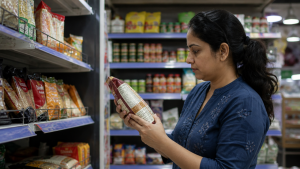
Food labelling is a key part of consumer protection in India. It helps buyers identify what a product contains, how it should be stored, and whether it is safe to consume within a specified period.
In India, food labels are regulated to improve transparency, strengthen standardisation, and support public health. The rules apply differently to packaged food, loose food, and processing-related safety controls.
Legal Framework for Food Labelling
The principal law governing food safety and standards in India is the Food Safety and Standards Act, 2006. It provides the legal framework for food standards, manufacturing, storage, distribution, sale, inspection, enforcement, and consumer protection. The Act consolidated several earlier food laws that were scattered across different departments and ministries.
The Food Safety and Standards Authority of India (FSSAI) functions under this Act. It sets science-based standards for food items and regulates manufacturing, storage, distribution, sale, and import to ensure the availability of safe and wholesome food for human consumption. Food business operators are expected to comply with requirements on hygiene, labelling, and safe handling.
Mandatory Labelling Information for Packaged Foods
Packaged food products in India must carry certain essential details so that consumers can make informed choices. These particulars help in identifying the product, assessing its composition, and understanding its shelf life.
- Product name: The common name or description of the food.
- List of ingredients: All ingredients used in the product, listed in descending order of weight or volume at the time of manufacture.
- Nutritional information: Details such as energy, protein, fat, carbohydrates, sugar, and, where required, vitamins and minerals, usually per 100g, per 100ml, or per serving.
- Allergen information: Declaration of common allergens such as milk, eggs, peanuts, tree nuts, soy, wheat, fish, and shellfish, if present.
- Net quantity: The weight or volume of the product.
- Manufacturer’s details: Name and address of the manufacturer or packer.
- FSSAI licence number: A 14-digit registration number required for food businesses in India.
- Country of origin: Mandatory for imported food products.
- Instructions for use or storage: Guidance on consumption and storage to preserve quality and safety.
These requirements are important for regulatory compliance and also help consumers compare products more effectively. In exam terms, labels are not just marketing tools; they are part of food safety regulation.
Key Date-Related Labelling Terms
Date marks are among the most important elements on food labels because they indicate shelf life and safety. Different terms have different meanings, and they should not be treated as interchangeable.
- Date of manufacture or packaging: The date when the food was produced or packed. It serves as the reference point for calculating shelf life.
- Best before date: Indicates the period during which the food retains its specific quality when properly stored.
- Use-by date: The last date up to which the food is considered safe for consumption.
- Expiry date: Often used in the same safety context as use-by date, especially for highly perishable foods.
Best before is mainly about quality such as taste, texture, and aroma. The product may still be edible after that date if properly stored. By contrast, use-by or expiry is linked to safety and should be taken seriously, particularly in the case of perishable items.
Exam point: “Best before” refers to quality, while “use-by date” refers to safety.
For consumers, understanding these terms is essential to avoid confusion and reduce food wastage. For regulators, standard date labelling improves uniformity and accountability across the food chain.
Loose Food Items and Compliance Issues
Loose food items have traditionally had fewer mandatory display requirements than packaged products. However, they still fall under hygiene, storage, and safety requirements under the food law framework. Food business operators selling loose items are expected to maintain sanitary conditions and ensure freshness through proper handling, storage, and regular checks.
State food safety authorities also issue directions for such establishments to support public health. This is especially relevant in food categories where shelf life is short and quality can vary significantly with moisture, temperature, and handling practices.
- Loose foods: Usually subject to hygiene and safety enforcement even when packaging-based labelling is limited.
- Storage conditions: A major factor in determining freshness and shelf life.
- State enforcement: Important for local monitoring and consumer protection.
Chemical Restrictions in Food Processing
Food safety regulation also covers substances used in food processing. Certain chemicals are prohibited because they pose serious health risks if used in food-related applications. This is a separate but important dimension of food safety compliance.
- Ethylene glycol: A toxic industrial compound not permitted for use in food processing.
- Diethylene glycol: Also toxic and strictly prohibited in food processing applications.
- Propylene glycol: A permitted alternative, including use as a coolant in milk processing units.
These restrictions are significant for dairy and other processing units where coolants and related materials are used. The prohibition of toxic compounds reflects the preventive approach of India’s food safety system.
Key Prelims Takeaways
- Food Safety and Standards Act, 2006: The principal law governing food safety and labelling in India.
- FSSAI: The apex body regulating food standards, manufacturing, storage, sale, and import.
- Packaged food labels: Must include product name, ingredients, nutrition data, allergen information, net quantity, manufacturer details, and licence number.
- Date marks: Manufacture date, best before date, and use-by date are different and should not be confused.
- Best before: Indicates quality; use-by date indicates safety.
- Loose foods: Subject to hygiene and safety oversight even where packaging labels are not used.
- Chemical control: Ethylene glycol and diethylene glycol are banned in food processing; propylene glycol is permitted as an alternative coolant.
Recent Context
The Uttar Pradesh Food Safety and Drug Administration has made it mandatory for sweet shops and manufacturing establishments to display a use-by date for all sweets, including loose sweets, from October 15, 2026. The move aims to standardise freshness information and improve consumer awareness. The usable period for sweets can range from one day to 30 days depending on ingredients, moisture content, and storage conditions.
| Related | |
|---|---|