Two New Tardigrade Species Discovered in Atlantic Ocean
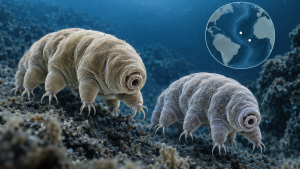
An international team of marine biologists discovered two new tardigrade species on Senghor Seamount in the Eastern Tropical Atlantic, off Cape Verde. Taxonomic findings were published in ZooKeys in late October and November 2026.
New species and identification
The species are Megastygarctides hekatae and Parastygarctus potercha. Megastygarctides hekatae is less than 200 micrometres long and has rare spine-like structures near its genital opening, previously known in only one other tardigrade species. Parastygarctus potercha measures about 70 micrometres. Led by Dr Roman Trokhymchuk, the team identified them in sediment samples collected during a 2009 expedition aboard the research vessel Meteor. Trokhymchuk is associated with the Dutch Naturalis Biodiversity Center and the German Centre for Marine Biodiversity Research, Senckenberg am Meer. The study also provides taxonomic descriptions and updated identification keys for both genera.
Tardigrade diversity on the seamount
Researchers identified 20 tardigrade taxa on the seamount summit, at depths of about 100–130 metres. A deep-sea site nearly 100 kilometres north, at approximately 3,300 metres, yielded two taxa. The findings identify the seamount as a site of markedly greater tardigrade diversity than the nearby deep-sea location.
Important Facts for Exams
- Heterotardigrade characters: Heterotardigrades are generally distinguished by dorsal cuticular plates and sensory appendages, characters useful for separating them from other tardigrade lineages.
- Microscopic identification: Tardigrade species identification often relies on microscopic details such as claw architecture, cephalic cirri and cuticular sculpturing, rather than body size alone.
- Seamount-driven mixing: Seamount relief can disrupt prevailing currents and generate internal waves, enhancing local vertical mixing and creating habitat conditions unlike surrounding plains.
| Related | |
|---|---|