Supreme Court Allows Minor’s 31-Week Pregnancy Termination
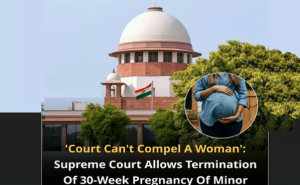
In a significant judgment, the Supreme Court allowed a 15-year-old girl to medically terminate her 31-week pregnancy, stressing that reproductive autonomy is a fundamental right under Article 21 of the Constitution. The Court said forcing a minor to continue an unwanted pregnancy would violate her dignity, privacy and personal liberty.
Right to Reproductive Choice Upheld
A bench of Justice B.V. Nagarathna and Justice Ujjal Bhuyan ruled that a woman’s right to make decisions concerning her own body is an essential part of personal liberty. The Court stated that no woman, especially a minor, should be compelled to carry a pregnancy to term against her will.
Psychological Distress Considered
The Court noted that the minor was under severe mental stress and had reportedly attempted suicide twice. It observed that continuing the pregnancy would cause grave emotional, physical and psychological trauma. The bench said forcing her to continue would be a direct attack on her right to live with dignity.
Debate Over 24-Week Legal Limit
The government argued that the case had crossed the statutory 24-week limit under the Medical Termination of Pregnancy (MTP) Act and warned of medical risks to both the girl and the foetus. It also suggested delivery followed by adoption. However, the Court said exceptional cases involving minors require priority for the child’s best interests over procedural restrictions.
Important Facts for Exams
- Article 21 of the Constitution guarantees the right to life and personal liberty.
- The Medical Termination of Pregnancy (MTP) Act regulates conditions for legal abortion in India.
- The standard upper limit for abortion under the MTP Act is generally 24 weeks in special categories.
- Reproductive autonomy has been recognised by Indian courts as part of privacy and dignity rights.
Importance of Bodily Autonomy
The Supreme Court emphasised that denying relief in such cases could create irreversible consequences for a minor’s education, mental health and social life. It warned that repeated rejection of such petitions may discourage vulnerable girls from approaching courts, reinforcing that reproductive choice must receive the highest constitutional protection.
| Related | |
|---|---|