Sperm Whales May Use Human-Like Language Patterns
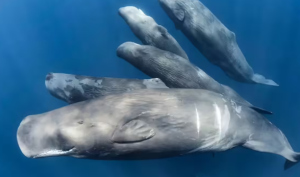
A new scientific study has suggested that sperm whales may use communication structures similar to human language. Researchers studying their vocal sounds, known as codas, found organised patterns and variations that indicate a more complex communication system than previously understood.
Sperm Whale Codas Show Structured Patterns
Sperm whales communicate through rapid bursts of clicks called codas. These clicks are produced in repeated patterns and are mainly recorded when whales come to the ocean surface to breathe. Scientists have observed that these codas may contain rhythm and spacing variations similar to vowel-like sounds in human speech.
Research by Project CETI
The study was carried out by researchers associated with Project CETI, which focuses on decoding sperm whale communication using artificial intelligence and advanced underwater recording systems. According to scientists, the flexibility in click patterns suggests that whales may use a structured and evolving form of communication.
Social Behaviour Supports Complex Communication
Sperm whales are highly social marine mammals and often live in close family groups. Females and younger whales remain together for long periods, while codas may help maintain social bonds and exchange important information. Their strong group structure supports the idea of advanced communication systems.
Important Facts for Exams
- Sperm whale is the largest toothed animal on Earth and has the largest brain among mammals.
- It can dive more than 3,000 feet deep and hold its breath for up to 90 minutes.
- Its main food source is squid, hunted in deep ocean waters.
- Project CETI stands for Cetacean Translation Initiative and studies whale communication.
Language Similarities Still Under Study
Scientists clarified that whales are not speaking human language, but their click patterns show structural similarities in repetition and variation. This indicates a layered communication system rather than simple signals. The findings open new possibilities for understanding marine intelligence and animal communication evolution.
| Related | |
|---|---|