Short Note: Majuli’s satras, crafts and communities
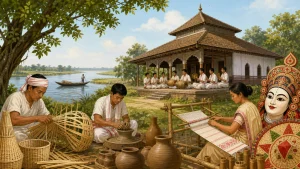
Majuli, an island in the Brahmaputra River, is known for its Vaishnavite monasteries, called satras. Linked to the tradition of Srimanta Sankardeva, the satras preserve Assamese arts, music, dance and drama. Auniati, Dakhinpat, Kamalabari and Garamur are among the major satras. Samaguri Satra is known for traditional mask-making.
The island is home to communities including the Mising and Deori. Visitors can see Mising chang ghar houses, local weaving and crafts, and pottery-making in Salmora village. Ferries to Majuli travel from Nimatighat near Jorhat. Ferry services may vary with weather and river conditions.
Notable Points
- Majuli mask-making: Assamese masks include mukh mukha, which covers the face; bor mukha, which covers the body with a costume; and suti su mukha, which is smaller and more compact than bor mukha. Traditional materials include bamboo, cane, clay, cow dung, jute fibre, paper and cloth. Hengul and haital were traditional colours. Each mask usually takes 10 to 15 days to make. Majuli’s mask-making and traditional manuscript-painting practices received Geographical Indication tags on 4 March 2024.
- Sattriya performance and styles: In Sattriya performances in temples and monasteries, dancers perform before a copy of the Bhagavata Purana placed in the Manikut, the eastern corner of the dance hall, rather than before an idol. The Sutradhara style combines nritta, nritya and natya and includes commentary in the local language. Ankiya Nat is a one-act-play subgenre featuring a ballad, dance and drama.
- Sattriya costume textiles: Sattriya costumes use pat silk, made from mulberry, and muga silk. Hand-woven costume fabrics may carry Kingkhap, Miri and Kolka motifs.
Originally written on
November 9, 2026
and last modified on
November 9, 2026.
| Related | |
|---|---|