SHAN Conservation Society to protect snow leopards in Ladakh
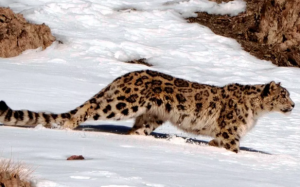
On 16 June 2026, the Lieutenant Governor of Ladakh approved the constitution of the Snow Leopard and High-Altitude Nature (SHAN) Conservation Society. The body is a dedicated institutional mechanism for wildlife conservation, scientific management of biodiversity, and community-led environmental stewardship in Ladakh’s mountain and cold desert ecosystems.
Snow leopard in India
Snow leopard is a large cat species adapted to high-altitude habitats in the Himalayas and the trans-Himalayan region. India’s 2024 Snow Leopard Population Assessment estimated 718 snow leopards in the country, and Ladakh accounted for 477 of them.
Mandate of the SHAN Conservation Society
The SHAN Conservation Society will work on conservation of alpine fauna, flora, wetlands, and fragile cold desert ecosystems in Ladakh. Its functions include scientific monitoring, research, habitat protection, mitigation of human-wildlife conflict, and promotion of eco-development and sustainable livelihood opportunities.
Composition and institutional structure
The Lieutenant Governor of Ladakh will chair the society. Ex-officio members include the Chief Secretary, the Member of Parliament from Ladakh, and the Chief Executive Councillors of the Ladakh Autonomous Hill Development Councils in Leh and Kargil. Non-official members include Palga Rinpoche, Sejal Worah of WWF India, Sandesh Kadur of the National Geographic Society, the President of the Women’s Alliance of Ladakh, and Ghulam Mohammad Khan.
Important Facts for Exams
- Snow leopard is listed as Vulnerable on the IUCN Red List.
- India is one of the range countries of the snow leopard in Asia.
- Ladakh contains cold desert habitats and high-altitude wetlands.
- Community-based conservation is used in several Himalayan wildlife programmes.
Cold desert ecology of Ladakh
Ladakh is a high-altitude cold desert region with sparse vegetation, low precipitation, and extreme temperature variation. The region supports alpine fauna, wetland ecosystems, and species adapted to trans-Himalayan conditions.
| Related | |
|---|---|