RBI Regulatory and Consumer Protection Functions
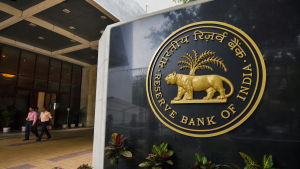
The Reserve Bank of India is the country’s central bank and the main authority for regulating the banking system, managing currency and supporting financial stability. It also plays a key consumer-protection role across banking and digital payment ecosystems.
Regulatory framework of the central bank
The RBI derives its powers from key statutes that define its role in currency management, banking supervision and monetary stability. Its regulatory reach extends to commercial banks, cooperative banks, non-banking financial companies and authorised payment system operators.
- Reserve Bank of India Act, 1934: Provides the core legal foundation for central banking operations, currency management and credit regulation.
- Banking Regulation Act, 1949: Empowers the RBI to license commercial banks, regulate their business operations and supervise cooperative financial institutions.
- Supervisory scope: Covers banks, NBFCs and payment system operators under the broader framework of financial regulation.
Supervision and regulatory instruments
The RBI monitors regulated entities through a mix of on-site inspections, off-site surveillance and risk-based supervision. These tools help track capital adequacy, asset quality, governance and liquidity compliance.
- Risk-based supervision: Assesses the financial health, governance standards and operational resilience of regulated entities.
- On-site inspections: Enable direct examination of books, controls and compliance systems.
- Off-site surveillance: Reviews periodic returns and financial disclosures to detect stress or non-compliance.
- Regulatory objective: Maintain a safe, stable and well-functioning financial system.
Core functions of the Reserve Bank of India
The RBI’s operational framework covers monetary policy, currency management, exchange control and emergency liquidity support. These functions are central to price stability and systemic confidence.
| Function category | Primary objective | Operational mechanism |
| Monetary policy | Control inflation and manage money supply | Use of repo rate, reverse repo rate and cash reserve ratio |
| Currency management | Maintain public trust in legal tender | Issue of currency notes and withdrawal of soiled notes |
| Foreign exchange control | Stabilise external trade and exchange rates | Management of foreign exchange reserves under relevant legal acts |
| Lender of last resort | Prevent systemic liquidity failures | Extension of emergency credit facilities to solvent financial institutions |
- Monetary policy: Used to influence inflation and liquidity conditions in the economy.
- Currency management: Involves issuance of banknotes and maintaining confidence in legal tender.
- Foreign exchange management: Supports orderly external transactions and exchange-rate stability.
- Lender of last resort: Provides emergency liquidity to solvent institutions facing temporary stress.
Consumer protection and customer rights
Along with prudential supervision, the RBI gives strong emphasis to fair treatment of bank customers and users of digital payments. Its consumer-protection framework focuses on transparency, privacy, suitability and grievance redress.
- Charter of Customer Rights: Recognises five basic rights — fair treatment, transparency, suitability, privacy and grievance redress.
- Board-approved policies: Regulated entities must adopt policies on transparent pricing and ethical debt collection practices.
- Consumer education: The RBI promotes awareness of customer rights and safe banking practices.
Important: The Charter of Customer Rights is a key exam point. It covers fair treatment, transparency, suitability, privacy and grievance redress.
Grievance redress architecture and ombudsman system
The RBI has created a structured mechanism for handling complaints against regulated entities. This helps customers seek redress without cost and ensures uniform handling of grievances.
- RBI – Integrated Ombudsman Scheme, 2021: Provides a cost-free appellate mechanism for resolving complaints against regulated entities.
- Complaint Management System: Functions as a centralised web portal for tracking grievance status in real time.
- Internal ombudsmen: Banks and large prepaid payment instrument issuers must appoint internal ombudsmen to review rejected complaints independently.
- Redress objective: Improve accountability and speed up complaint resolution.
Digital payments, fraud prevention and financial literacy
As digital transactions expand, the RBI has strengthened rules on cybersecurity, customer liability and reversal timelines. It also runs financial literacy efforts to reduce fraud and improve user awareness.
- Customer liability: In unauthorised electronic banking transactions, liability may be zero or limited to a fixed amount if reported promptly.
- Turn-around time frameworks: Require compensation from banks for delayed reversals of failed transactions.
- Fraud prevention: RBI guidelines address cybersecurity risks, phishing and unauthorised digital access.
- Financial literacy campaigns: Target rural communities, senior citizens and other vulnerable groups.
- Consumer Education and Protection Department: Specialised RBI wing for customer grievances and financial literacy policy.
Institutional and historical facts
- Establishment: RBI was established on April 1, 1935, on the recommendations of the Hilton Young Commission.
- Head office shift: The central office was permanently moved from Calcutta to Mumbai in 1937.
- Nationalisation: The institution was nationalised on January 1, 1949, under the Reserve Bank (Transfer to Public Ownership) Act, 1948.
- Monetary Policy Committee: Constituted under the Reserve Bank of India Act, 1934, it determines the benchmark policy interest rate.
Key Prelims Takeaways
- RBI Act, 1934: Core law for central banking, currency management and credit regulation.
- Banking Regulation Act, 1949: Gives RBI powers over bank licensing and supervision.
- Supervision tools: Risk-based supervision, on-site inspection and off-site surveillance.
- Monetary tools: Repo rate, reverse repo rate and cash reserve ratio are key policy instruments.
- Customer rights: Fair treatment, transparency, suitability, privacy and grievance redress.
- Ombudsman mechanism: RBI – Integrated Ombudsman Scheme, 2021 is cost-free for consumers.
- Digital protection: Prompt reporting can limit or eliminate customer liability in unauthorised transactions.
| Related | |
|---|---|