
Paranal solar ESPRESSO Telescope achieves first light
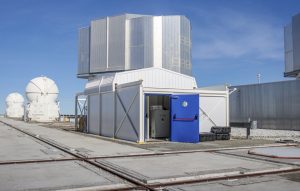
The Paranal solar ESPRESSO Telescope (PoET) achieved first light at the European Southern Observatory’s Paranal Observatory in Chile’s Atacama Desert. The system completed test observations and acquired spectra of the full solar disc and selected solar regions.
PoET and ESPRESSO
PoET operates with ESO’s ESPRESSO instrument, which is a high-resolution spectrograph used for precise astronomical measurements. The telescope is designed for daytime solar observations, while the Very Large Telescope (VLT) uses the same instrument at night.
Technical Features
PoET includes a main telescope with a 60-centimetre mirror for observing specific solar regions such as sunspots. It also has a smaller telescope for collecting light from the entire solar disc. The system is managed remotely from the Centre for Astrophysics of the University of Porto in Portugal.
Scientific Purpose
PoET is designed to study how variations in starlight, including sunlight, can mask the presence of orbiting exoplanets. The observations support research on the detection and characterisation of worlds beyond the Solar System.
Important Facts for Exams
- ESO’s Paranal Observatory is located in the Atacama Desert of northern Chile.
- ESPRESSO stands for Echelle SPectrograph for Rocky Exoplanets and Stable Spectroscopic Observations.
- The Very Large Telescope is one of ESO’s major ground-based astronomical facilities in Chile.
- First light is the first successful use of a telescope or instrument for observations.
Current Status
As of 3 May 2026, the team planned further testing and optimisation before full scientific observations begin. PoET was designed and developed in Portugal with funding from the European Research Council.
| Related | |
|---|---|


