North Eastern Railway Runs Longest Awadh Mahashakti Freight Train
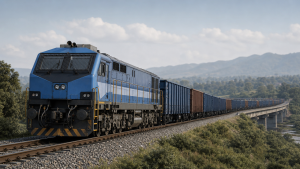
The Lucknow Division of the North Eastern Railway (NER) operated the “Awadh Mahashakti” freight train on 20 August 2026. The train was formed by combining three cargo trains and ran as the longest train in the history of the zonal railway.
Freight Train Operations in Indian Railways
Freight trains carry goods such as coal, cement, foodgrains, fertilisers, petroleum products, and containers across the Indian Railways network. Indian Railways uses heavy-haul operations, multiple locomotives, and long rakes to move larger volumes of cargo on a single path.
Awadh Mahashakti Train Configuration
The Awadh Mahashakti freight train had 129 wagons and three heavy-duty locomotives. It departed from Gonda Junction at 1:50 p.m. on 20 August 2026 and moved towards the Moradabad Division via Sitapur.
The train was assembled at the Gonda ROH depot, where ROH stands for Routine Overhaul. Routine Overhaul depots handle inspection, maintenance, and servicing of railway rolling stock.
Railway Divisions and Operational Roles
The North Eastern Railway is one of the railway zones of Indian Railways, and the Lucknow Division is one of its administrative divisions. Divisional Railway Managers supervise divisional operations, while Senior Divisional Operations Managers handle coordination of train movement and traffic control.
Gaurav Agarwal served as the Divisional Railway Manager for the operation, and Dr. Shilpi Kannaujiya led the coordination as Senior Divisional Operations Manager. Mahesh Gupta served as the Public Relations Officer for the communication of the operational details.
Important Facts for Exams
- Indian Railways is divided into railway zones, and each zone contains several administrative divisions.
- Gonda Junction is a railway station in Uttar Pradesh and lies under the North Eastern Railway zone.
- ROH means Routine Overhaul, which is a maintenance process for railway coaches and wagons.
- Freight trains are used for bulk transport and form a major part of railway revenue in India.
Operational Significance in Rail Logistics
Combining three trains into one reduced the use of track capacity, fuel, and transit time. The operation used 129 wagons and three locomotives on a single freight movement.
| Related | |
|---|---|