Nigeria Confirms First Imported Ebola Bundibugyo Case
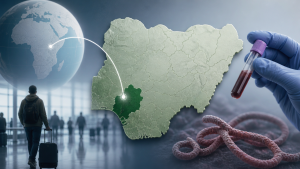
Nigeria confirmed its first imported case of Ebola Bundibugyo virus disease in the Federal Capital Territory on 20 October 2026. The case involved a woman who travelled to Nigeria from Uganda after a business trip to the eastern Democratic Republic of Congo, where her exposure is under investigation.
Ebola Virus Disease
Ebola virus disease is a severe illness caused by viruses in the genus Orthoebolavirus, within the family Filoviridae. Bundibugyo virus is one of the viruses that causes Ebola virus disease. The disease is transmitted through direct contact with the blood or body fluids of an infected person, or with contaminated objects and materials.
The woman’s symptoms began on 7 October, four days after her arrival in Nigeria. She sought care at a private medical centre in Abuja on 11 October, and laboratory testing confirmed Bundibugyo virus infection on 20 October. As of 21 October, she was in isolation and receiving medical care.
Incubation and Disease Transmission
The incubation period for Ebola virus disease is 2–21 days. People can transmit the virus after symptoms begin; transmission occurs through direct contact with infectious body fluids. The patient travelled through Uganda in early October without symptoms after her business trip to the eastern Democratic Republic of Congo. Investigators are examining her travel and exposure history to identify where infection occurred.
Outbreak Surveillance and Response
The outbreak began in the Democratic Republic of Congo on 15 May 2026. Nigeria was the fifth country to detect the virus during the outbreak. Nigeria’s Federal Ministry of Health and Social Welfare identified 44 contacts for monitoring. The Nigeria Centre for Disease Control and Prevention activated its incident management system, with support from the World Health Organization and other partners. The World Health Organization urged countries in the region to maintain preparedness and reinforce infection-prevention measures.
Important Facts for Exams
- Ebola virus disease is caused by viruses belonging to the family Filoviridae.
- The incubation period for Ebola virus disease is 2–21 days.
- Direct contact with infectious body fluids is a route of Ebola virus transmission.
- The Nigeria Centre for Disease Control and Prevention coordinates Nigeria’s public-health response to disease outbreaks.
Laboratory testing confirmed the Nigerian case on 20 October 2026. The 44 identified contacts were being monitored as of the announcement.
| Related | |
|---|---|